
Choosing the right spray gun to paint house exteriors and interiors is one of the highest-leverage decisions a painting contractor makes. A single-family repaint can involve 3,000 to 6,000 square feet of wall area, several substrates—cedar siding, fiber cement, stucco, drywall, and factory-primed trim—and two or more coating chemistries applied within the same working week. Equipment that atomizes one product efficiently can ruin the finish of another. The deciding variables are rarely limited to brand or price. Pump ratio, fluid tip diameter, air cap geometry, hose bore, and the rheological profile of the coating under shear all interact, and each one shifts the outcome on the wall.
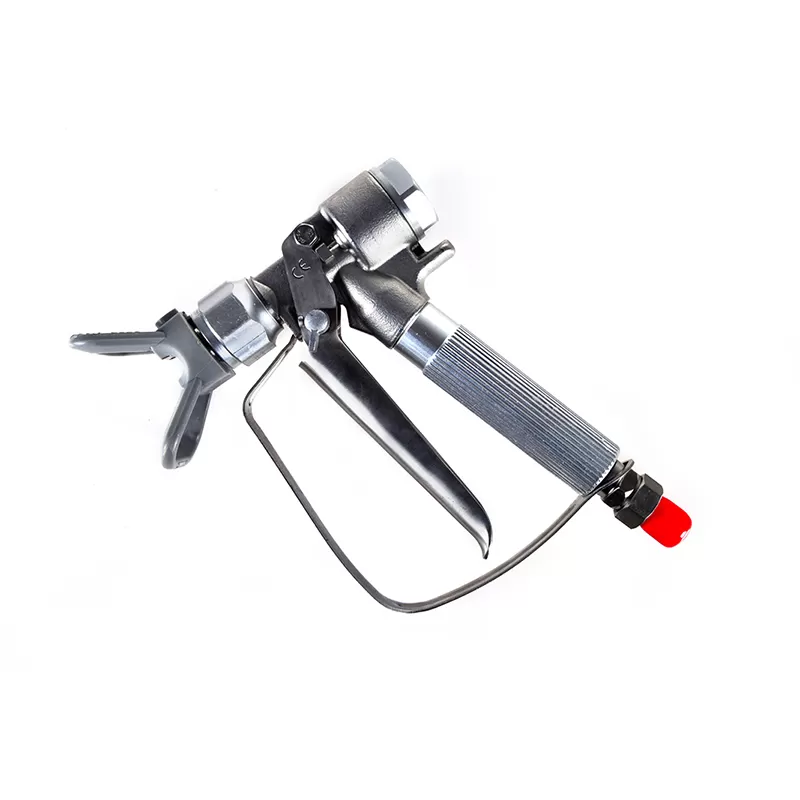
Airless, HVLP, and Air-Assisted Airless: Matching Technology to the Job
Atomization method determines how a coating leaves the nozzle, how fast it deposits, and how much material is lost to overspray. Three architectures dominate residential repainting, and each occupies a distinct band of the production-versus-finish spectrum.
Airless Piston and Diaphragm Pumps
Airless units pressurize the coating hydraulically, typically between 2,000 and 4,000 psi, then force it through a small orifice. The pressure drop across the tip converts the fluid stream into a fan of droplets without any atomizing air. Output rates are high, which is why airless dominates large wall and ceiling work, and why a single operator can coat a full gable end in minutes rather than hours. Piston pumps handle continuous duty cycles and abrasive coatings such as elastomerics; diaphragm pumps suit lower-volume work and are friendlier to shear-sensitive products. Gas, electric, and pneumatic drives each impose different maintenance rhythms on the packings, valves, and surge chamber.
HVLP and LVLP for Trim and Cabinetry
High-volume, low-pressure guns cap the air pressure at the nozzle at roughly 10 psi. The lower velocity produces a softer, more controlled pattern, greater transfer efficiency, and a finer finish on doors, casing, crown, and built-ins. The trade-off is speed: an HVLP gun to paint house trim requires more passes and better technique than an airless unit. LVLP variants reduce air consumption further, which matters when the compressor is shared with other trades on site.
Air-Assisted Airless as a Hybrid
Air-assisted airless lowers the fluid pressure to roughly 1,000–2,000 psi and introduces a small volume of atomizing air at the cap. The result is finer droplet size than pure airless, better flow-out on high-solids and low-VOC coatings, and reduced tip wear because the orifice carries less of the atomization burden. For contractors working with premium waterborne acrylics that resist being pushed through a standard airless tip, this configuration often resolves finish complaints without sacrificing coverage rate.
Component-Level Anatomy of a Professional Spray Gun
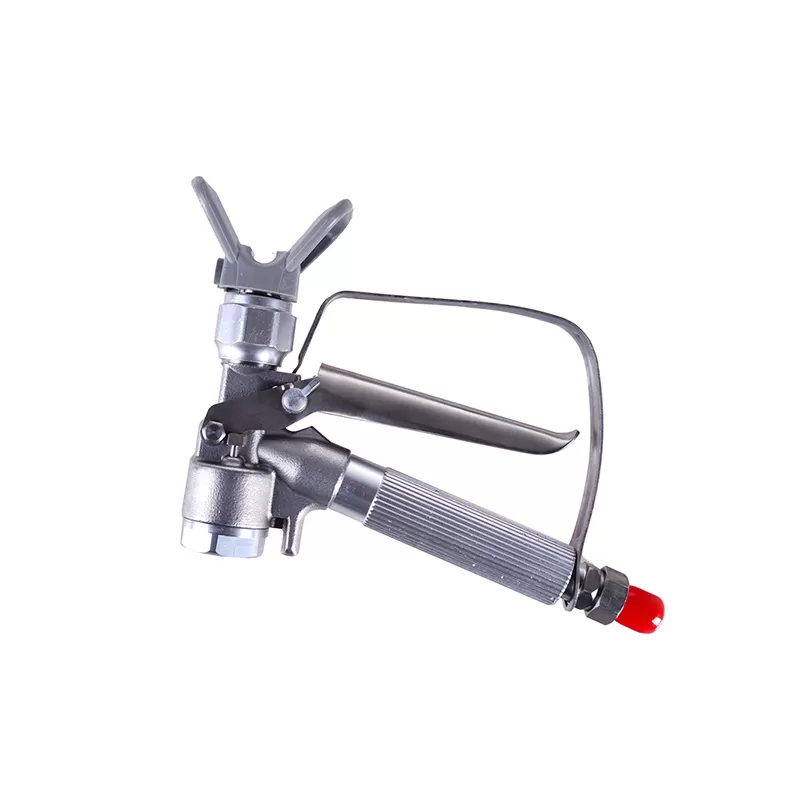
A production-grade gun is a precision assembly, and understanding its parts removes the guesswork from troubleshooting. The fluid section controls volume; the air section controls pattern shape and droplet size; the interface between them determines whether the two cooperate.
Fluid Tip, Needle, and Seat Geometry
Tip orifice diameter is expressed in thousandths of an inch and must match coating viscosity and the desired film build.
Needle taper affects the opening rate and how abruptly fluid flow begins when the trigger is pulled.
Seat concentricity governs shut-off quality; a worn seat drips onto finished surfaces between passes.
Carbide and tungsten carbide inserts extend service life when spraying filled or abrasive coatings.
Air Cap and Fan Pattern Control
The air cap's horn holes and center port shape the fan. Adjusting the pattern valve changes width; adjusting the fluid valve changes volume; adjusting the air valve changes atomization quality. These three controls are interdependent. Widening the fan without raising fluid volume produces a thin, dry pattern; raising fluid without adequate air produces coarse droplets and orange peel.
Packings, Swivels, and Filtration
Leather and PTFE packings seal the needle shaft against fluid migration. A weeping packing contaminates the gun body and eventually reaches the operator's hand. Swivel joints reduce hose torque and let the wrist follow the fan pattern naturally across long wall runs. Inline filters and gun-mounted mesh screens trap coagulated material before it reaches the tip, which is the most common cause of spitting and fishtailing patterns.
Coating Rheology and Its Influence on Gun Setup
Every coating responds differently to the shear forces inside a spray gun. Viscosity measured on a Stormer or Zahn cup is only a starting point, because the coating thins as it accelerates through the tip and thickens again as it lands on the substrate.
Waterborne Acrylics and Latex Emulsions
These products are typically shear-thinning and pseudo-plastic. They require sufficient pressure to break down the structure, but excessive pressure drives droplet velocity up and creates dry spray before the film can level. Thinning with water beyond the manufacturer's limit reduces opacity, adhesion, and block resistance, so the correct fix is usually a larger tip and a lower pressure, not more solvent.
Alkyds, Urethanes, and Elastomeric Coatings
Solvent-borne enamels flow out more readily and tolerate finer atomization. Two-component urethanes demand precise mix ratios and pot-life discipline, and their viscosity drifts as the pot ages. Elastomerics are high-build, high-viscosity materials that need large orifices, short hoses, and a pump rated for abrasive service. Matching the gun to the coating's chemistry prevents the operator from compensating with pressure, which is where most finish defects originate.
Pressure, Atomization Quality, and Transfer Efficiency
Droplet size distribution determines both appearance and material cost. Smaller droplets level into a smoother film but are more easily carried away by air movement; larger droplets land wet but produce texture. Transfer efficiency—the percentage of coating that actually adheres to the target—ranges from roughly 30–40 percent for conventional air spray to 65–80 percent for HVLP and 55–70 percent for airless, depending on distance, angle, and airflow around the building.
Gun distance of 10–12 inches from the surface, a perpendicular wrist angle, and a 50 percent overlap between passes keep the wet film uniform and minimize bounce-back. On exteriors, wind above roughly 10 mph disrupts the pattern regardless of gun quality, so staging and screening matter as much as equipment specification. Hose length also matters: every additional 50 feet of hose reduces available pressure at the tip, which pushes operators to raise pump pressure and lose the atomization quality they were trying to achieve.
Full-House Workflow: Sequencing, Masking, and Output Rate
Production rate depends on preparation and movement far more than on trigger speed. A disciplined sequence keeps the spray gun to paint house operations continuous rather than interrupted.
Work top-down within each room: ceilings, then walls, then trim, then floors.
Mask windows, hardware, and adjacent surfaces before the first pass, not during it.
Stage material and hose runs so the operator never crosses wet film to reach the next elevation.
Back-brush or back-roll on textured and porous substrates where atomized coating cannot penetrate.
Maintain a wet edge by spraying into the previous pass at a consistent pace.
Track square footage per gallon per hour to identify pressure and tip settings that waste material.
Exterior work adds weather sequencing. Morning dew, direct afternoon sun, and substrate temperature above 90°F all change open time and flash-off rate. Contractors who rotate elevations to follow the shade complete more square footage per day than those who spray a single face until the coating begins to skin over.
Defect Analysis and Corrective Adjustments
Surface defects are diagnostic signals rather than random failures. Each one points to a specific imbalance in the fluid-air-coating triangle.
Orange peel: fluid too thick, pressure too low, or tip too small for the viscosity.
Sags and runs: excessive fluid volume, slow passes, or a surface that has not been prepared for high film build.
Dry spray: gun distance too great, air pressure too high, or ambient temperature accelerating solvent loss.
Spitting: dried material in the tip, a clogged screen, or a worn needle seat.
Fishtail pattern: air cap partially blocked or fluid pressure exceeding the cap's atomization capacity.
Uneven sheen: inconsistent overlap, varying gun distance, or coating not properly agitated in the pot.
Correcting a defect begins with isolating one variable at a time on a test panel. Changing tip, pressure, and technique simultaneously makes the root cause impossible to identify and often introduces a second problem before the first is solved.
B2B Procurement Criteria for Spray Equipment
Buying for a crew is different from buying for a single user. Duty cycle ratings, spare-part availability, and service intervals determine total cost of ownership far more than the invoice price of the unit.
Duty cycle and continuous-run rating for multi-gun operations.
Availability of tips, needles, packings, and air caps as stocked consumables.
Compatibility with the coatings specified on commercial and residential contracts.
Compliance documentation for low-VOC and solvent regulations in the target market.
Service access, calibration support, and warranty terms that reflect real production hours.
Interchangeability of components across a fleet to reduce inventory complexity.
HVBAN manufactures fluid handling and spray equipment engineered around these procurement realities, with component tolerances and material specifications documented for distributors, OEM partners, and painting contractors who need repeatable results across large project portfolios. Evaluation units and technical documentation are available for teams standardizing a fleet.
Frequently Asked Questions
What size tip should be used with a spray gun to paint house exteriors?
Most exterior latex and acrylic emulsions flow best through a 0.015 to 0.019 inch tip at 2,000–2,500 psi. Thick elastomerics may require 0.021 to 0.031 inch, while stains and thin sealers typically run 0.011 to 0.013 inch. The correct starting point is the coating manufacturer's data sheet, adjusted for hose length and ambient temperature.
Can one spray gun handle both interior walls and exterior siding?
A single airless unit with interchangeable tips can cover both, provided the pump's pressure and volume ratings match the largest orifice used. Trim and cabinetry usually benefit from a separate HVLP gun, because the airless pattern is too aggressive for fine finish work.
How much coating is lost to overspray?
Transfer efficiency varies by technology and technique. Airless typically deposits 55–70 percent of the material on the target, HVLP reaches 65–80 percent, and conventional air spray can fall below 40 percent. Gun distance, wind, and pattern overlap account for much of the variation.
Why does the finish look rough even at high pressure?
Higher pressure does not guarantee better atomization. When fluid viscosity is too high for the tip, or when the tip is partially blocked, raising pressure increases velocity without reducing droplet size. A larger tip, a lower pressure setting, and clean filtration usually correct the texture.
How often should tips, needles, and packings be replaced?
Carbide tips generally last 40 to 80 gallons of abrasive coating before pattern degradation becomes measurable. Needles and seats wear more slowly but should be inspected whenever the gun drips between passes. Packings are consumable and should be replaced at the first sign of weeping.
What information is needed to specify equipment for a repainting fleet?
Coating types and viscosities, required film build, daily square footage targets, power availability on site, hose lengths, and operator experience level. These parameters define pump pressure, tip range, and gun configuration without guesswork.
Does air-assisted airless justify its cost over standard airless?
For contractors spraying high-solids, low-VOC, or premium waterborne finishes on visible surfaces, the finer atomization and reduced tip wear often offset the higher initial cost. For volume work on rough substrates, standard airless remains the more economical choice.
Project engineers, distributors, and painting contractors evaluating a spray gun to paint house programs can submit their coating specifications, daily output targets, and substrate mix to HVBAN for a configuration review, component quotation, and sample evaluation unit. Providing hose length, power supply, and finish requirements at the inquiry stage shortens the specification cycle and ensures the delivered equipment matches the production environment.