
Every athletic director and grounds manager knows the frustration of maintaining sports fields. You need sharp lines that hold up through four quarters of football or back-to-back soccer tournaments. When searching online for a field striper for sale, low-cost options immediately crowd your screen. These budget units look fine in catalog photos, but they quickly fail on real turf.
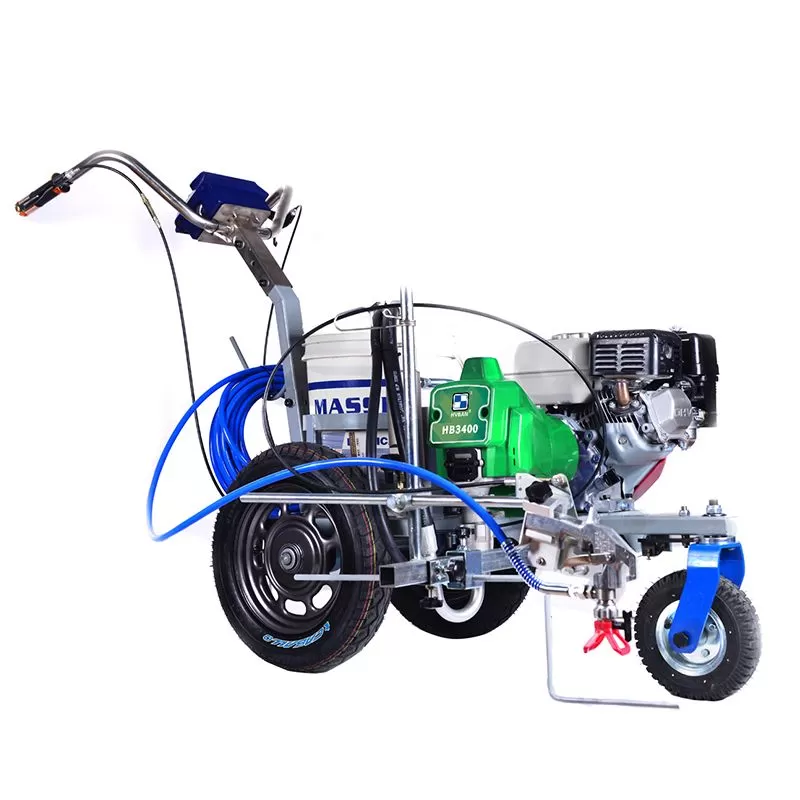
Flimsy spray carts break down under daily abuse. They leave faded lines, clog constantly, and waste hundreds of dollars in wasted turf paint. If you need consistent, professional results, you must invest in a true commercial field marking machine. Equipment manufacturers like HVBAN design commercial sprayers to tackle demanding field schedules without sputtering out halfway through the season.
If you are planning to upgrade your maintenance fleet this season, contact our equipment team for a commercial product specification and direct pricing quote.
Consumer vs. Commercial-Grade: What Is the Difference?
A standard paint sprayer and an industrial sports turf striper differ fundamentally in their engineering. Consumer-grade machines depend on cheap materials and low-pressure delivery. Commercial machines, on the other hand, withstand wet grass, bumpy terrain, and thick paint formulations.
1. Pump Technology
Budget stripers often rely on aerosol cans or low-pressure diaphragm pumps. Aerosol machines blow away in the wind and generate massive plastic waste. Diaphragm pumps struggle to push thick athletic paint without heavy dilution, leading to runny, washed-out lines.
In contrast, a professional airless field striper utilizes a high-pressure piston pump. It pulls undiluted paint straight from a 5-gallon pail and atomizes it at pressures above 900 to 2,000 PSI. This pressure coats both sides of the grass blade all the way down to the roots.
2. Chassis and Structural Build
Inexpensive machines rely on thin stamped sheet metal joined by weak bolts. Over uneven turf, vibration loosens the hardware, throwing your spray alignment off center.
Commercial equipment features heavy-gauge welded tubular steel or corrosion-resistant aluminum frames. Turf management exposes machinery to fertilizer, damp ground, and abrasive chalk. A heavy frame absorbs mechanical vibrations and keeps your line tracking true across the pitch.
3. Line Definition
Consumer units often require two or three passes to produce a visible line. Even then, overspray blurs the edges. A commercial athletic field paint striper achieves bright, razor-sharp lines in a single pass. It delivers uniform paint density that dries fast and stays visible through heavy rain and sliding cleats.
5 Non-Negotiable Features of a Commercial Field Striper
When reviewing product sheets for any field striper for sale, look beyond the sales pitch. Inspect the technical specifications for these five essential components.
1. High-Performance Power Systems
Commercial field markers run on one of two power plants:
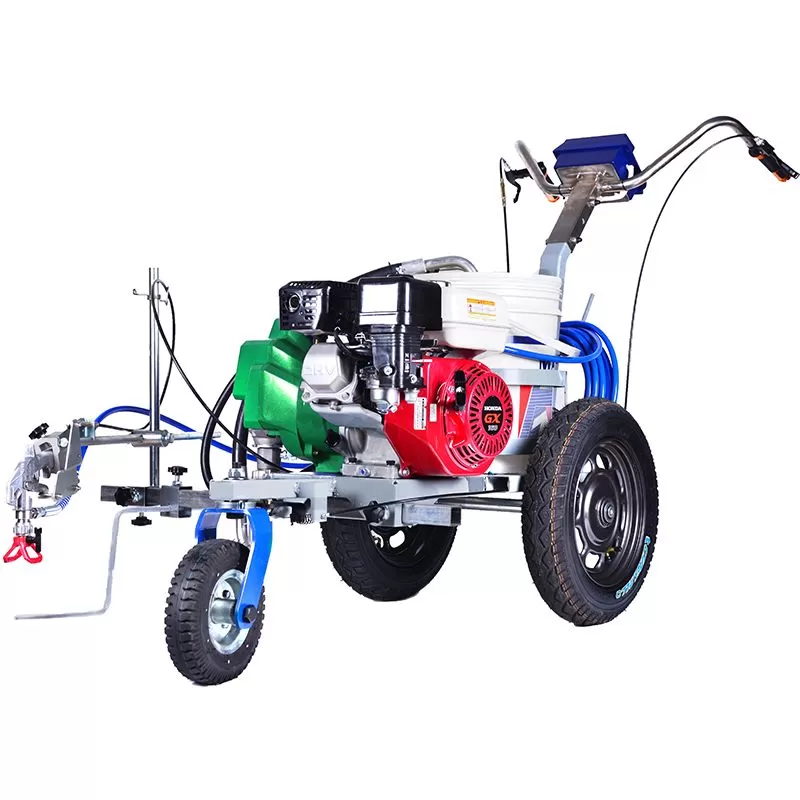
- Gasoline Engines: Industrial small engines (such as commercial-grade Honda GX engines) run all day. They provide relentless power for marking multi-field sports complexes without downtime.
- Lithium-Ion Battery Systems: A modern battery-powered line striper delivers quiet operation, instant startup, and zero exhaust emissions. They work perfectly for indoor fieldhouses, campus facilities, and communities with noise ordinances.
2. Fully Adjustable Pressure Regulation
Turf is not flat like a parking lot. Natural grass contains ruts, crowns, and divots. A commercial unit uses an electronic or mechanical pressure control system that maintains constant fluid pressure regardless of ground speed. This prevents blotchy pools of paint when you slow down to turn.
3. Industrial-Grade Nozzle and Filtration System
Field marking paint contains dense pigments and binders that clog standard tips. Commercial line stripers feature reversible spray tips (such as RAC tips). If a clog occurs, you simply rotate the nozzle 180 degrees, spray it clear, and keep working.
They also include multi-stage filtration: at the suction tube, inside the manifold, and inside the spray gun handle. Manufacturers like HVBAN engineer fluid sections with stainless steel balls and carbide seats to prevent abrasive paint from grinding down the internal seals.
4. Direct-from-Pail Paint Delivery
Pouring heavy paint into small reservoirs creates messy spills and invites dried paint flakes into the system. Professional rigs accept a standard 5-gallon bucket directly onto the frame. Simply drop the siphon tube into the pail and start striping. Some larger systems can even draw from 55-gallon drums for high-volume tournament preparation.
5. Turf-Friendly Pneumatic Tires
Hard plastic wheels transfer every bump into the spray arm, creating wavy, jagged lines. True commercial turf equipment features wide, four-ply pneumatic turf tires. These broad tires distribute weight evenly, glide over soft soil, and prevent rutting on delicate natural grass.
Which Type of Commercial Field Striper Fits Your Facility?
Every facility has different field configurations, labor limits, and operational budgets. Match your workload to the right machine type.
Walk-Behind Airless Field Stripers
Walk-behind models represent the backbone of athletic field maintenance. They strike the ideal balance between mobility, precision, and cost. Groundskeepers at high schools, municipal parks, and soccer clubs rely on walk-behind units because they fit easily onto transport trailers and navigate tight spaces between practice fields.
Ride-On Field Stripers and Sulky Attachments
Walking ten to fifteen miles to mark an entire athletic complex burns out grounds crews. Ride-on platforms or stand-on sulky attachments double your striping speed. If you manage a university campus, major tournament hub, or multi-field baseball complex, a ride-on striper drastically reduces operator fatigue and cuts field setup time in half.
Automated and GPS-Guided Field Markers
Autonomous layout systems utilize GPS, laser guidance, and robotic bases to paint lines without manual string lines. While they carry a significantly higher initial price tag, they remove the need for manual field geometry layout. However, many operations still pair robotic painters with an airless manual unit for touch-ups, stencils, and logo painting.
The True ROI of Buying Commercial-Grade
A professional paint striper costs more upfront than a consumer model. However, calculating your total cost of ownership reveals that a commercial machine pays for itself within one to two seasons.
Reduced Paint Consumption
High-pressure airless atomization uses paint far more efficiently than gravity-fed or low-pressure systems. By applying a controlled, uniform film that bonds immediately to the turf blade, an airless rig cuts your overall paint consumption by 30% to 50%. Considering the high price of quality turf paint, these fluid savings yield thousands of dollars back to your budget annually.
Labor Hours Reclaimed
Laying out and striping a standard football field with a consumer machine can consume an entire afternoon. A commercial high-pressure unit finishes the same layout in a fraction of that time. Your maintenance staff can pivot to mowing, aeration, irrigation repairs, or facility upgrades instead of babysitting a sputtering striper.
Machine Lifespan and Resale Value
Budget machines often end up scrapped within two years. High-grade commercial field stripers remain operational for 7 to 10 years or longer when properly flushed and winterized. Commercial units feature modular components; when a packing seal or hose wears out, you replace that single part instead of junking the entire machine.
Buyer's Checklist: Questions to Ask Before You Purchase
Before you commit capital to an online field striper for sale, ask the supplier or manufacturer these four practical questions:
- Are replacement parts stocked locally? Packings, valves, and spray tips wear down over time. Ensure the vendor stocks replacement pump sections, filters, and hoses for immediate shipping so you never miss game day.
- What does the warranty actually cover? Many retail machines void their warranties if you use them for commercial or municipal operations. Demand a commercial-use warranty that protects the frame, motor, and fluid section.
- How fast can the system be flushed and cleaned? Dried paint ruins pumps. Look for machines with fast-flush cleanout ports that connect directly to a garden hose for rapid end-of-day washdowns.
- Can the system spray non-diluted paints? Thinning paint with water weakens its brightness and durability. Ensure the machine produces enough fluid pressure to pump undiluted, premium athletic turf paints directly from the container.
Frequently Asked Questions
Q1: Can I use an airless sports turf striper on asphalt or concrete
parking lots?
A1: Yes. Most commercial field marking machines can
spray hard surfaces. You simply swap the low-pressure turf tip for a standard
pavement striping tip and adjust your spray height. Many schools use the same
HVBAN airless striper to maintain both their soccer fields and their campus
parking lots.
Q2: Why should I choose a battery-powered line striper over a
gas-powered model?
A2: Battery-powered units operate in near
silence, emit no toxic fumes, and eliminate engine oil changes, spark plugs, and
carburetor issues. They work well for early morning applications near
residential neighborhoods, on campus quads, and inside covered fieldhouses.
Q3: How much paint can I realistically save by moving to an airless
field striper?
A3: Most turf managers save roughly 30% to 50% on
paint compared to aerosol or low-pressure reservoir systems. Airless atomization
forces paint deep into the turf canopy with minimal overspray, giving you bright
lines with a single pass.
Q4: How do I prevent paint clogs when using viscous athletic field
paint?
A4: Select a machine with a reversible spray tip and
multi-stage filtration. Always strain bulk paint before pumping if the pail was
previously opened. Flush your system with clean water immediately after every
striping session to prevent paint from curing inside the manifold and gun.
Q5: What makes HVBAN commercial equipment reliable for school
districts and municipalities?
A5: HVBAN builds line stripers with
industrial fluid sections, hardened chrome piston rods, and rigid chassis
configurations. These machines handle heavy continuous use, resist corrosive
athletic field chemicals, and feature easily accessible replacement parts that
keep downtime to an absolute minimum.
Make the Right Investment for Your Sports Fields
Settling for an underpowered machine leads to uneven lines, wasted labor, and costly pump failures. When you spot a field striper for sale, evaluate the pump build, frame materials, and pressure controls to guarantee true commercial performance. Quality turf equipment transforms field maintenance from a weekly headache into a fast, repeatable task.
Ready to upgrade your sports facility with rugged, commercial-grade equipment? Contact our field marking specialists today to discuss technical specifications, request a quote, or find the ideal striper for your facility's acreage and budget.