
Polyurethane spray application is an exercise in reactive chemical engineering under extreme conditions. Contractors do not merely spray paint; they manage an exothermic polymerization reaction inside an atomized cloud. If the fluid mechanics falter for even a split second, the chemical matrix collapses.
A flawless insulation envelope requires strict 1:1 volumetric stoichiometry, stable fluid temperatures, and continuous impingement pressure. When field problems arise, technicians often blame the chemical formulation. However, mechanical diagnostics usually reveal pump cavitation, dynamic pressure drops, or thermal lag within the delivery hardware.
For more than two decades, HVBAN has engineered high-pressure fluid transfer machinery designed to eliminate these failure modes. This guide breaks down the core mechanical principles of modern spray foam application equipment, helping contractors, plant managers, and field technicians optimize their systems for uptime and consistent material yield.
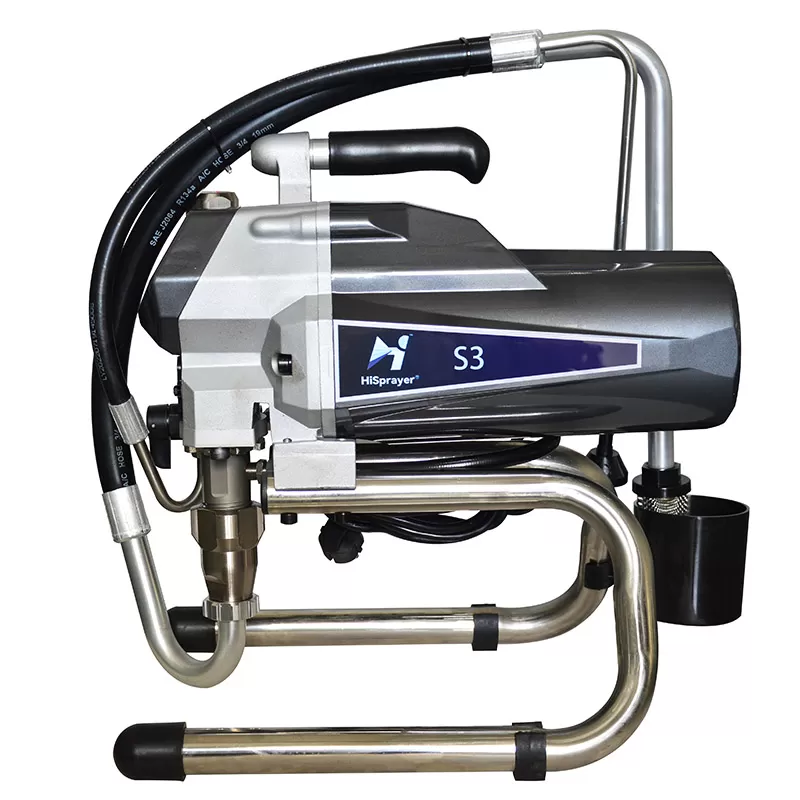
1. The Physics of Polyurethane Spray and Fluid Mechanics
Two liquid components form rigid or open-cell polyurethane foam: Polymeric Methylene Diphenyl Diisocyanate (Side A / "Iso") and a formulated Polyol resin blend (Side B / "Resin"). Under ambient temperatures, these chemicals exhibit drastically different rheological profiles.
Side A is generally thinner, sensitive to moisture, and prone to crystallization when exposed to ambient air. Side B contains blowing agents, catalysts, fire retardants, and surfactants, making it viscous, temperature-sensitive, and prone to phase separation.
To produce a stable cellular structure, spray foam application equipment must resolve these physical discrepancies before the chemicals collide. Engineers face three non-negotiable hurdles:
Viscosity Matching: Equalizing the flow resistance of two completely different fluids.
Mass Transfer Uniformity: Delivering identical volumetric displacement on every stroke.
Impingement Energy: Forcing two fluid streams to collide with enough kinetic energy to mix mechanically without a static mixer.
Achieving this balance requires high-pressure fluid equipment built with tight tolerances, rugged valves, and high-efficiency heating zones.
2. Key Engineering Pillars of Spray Foam Equipment
Modern plural component machines rely on two critical internal systems: dynamic positive displacement and closed-loop thermal control.
Proportioning and Ratio Control
True 1:1 proportioning requires positive d
isplacement fluid sections. Most proportioners utilize dual double-acting piston pumps driven by a central motor. Fluid output must match on both the forward and back strokes.
Mechanical precision dictates volumetric efficiency. If a piston seal wears down by a few thousandths of an inch, fluid slips past the packing on the pressure stroke. This internal slip causes an off-ratio condition that ruins the finished foam core.
HVBAN holds several fluid machinery patents specifically targeting pump wear resistance and seal longevity. Utilizing hardened chrome-plated rods, micro-polished cylinder walls, and spring-energized self-adjusting packings, these pumps prevent cross-over contamination and extend operational life under continuous high-pressure loads.
Thermal Dynamics and Viscosity Control
Viscosity is an inverse function of fluid temperature. Cold Side B material flows like molasses, while warm Side A thins rapidly. If pumped cold, the differential back-pressure throws the system off ratio instantly.
Proportioners solve this using a two-stage thermal architecture:
Primary Heaters: High-wattage mass heaters bring both chemical drums up to target temperatures (typically 110°F to 140°F / 43°C to 60°C) as the fluid passes through aluminum or steel heat transfer blocks.
Heated Hose Systems: Copper-wrapped, low-voltage heated hoses sustain core temperatures across run distances from 50 to 400 feet, preventing boundary-layer cooling during spray pauses.
Proper thermal balancing ensures that both chemicals reach the spray gun head at matching viscosities. This step is mandatory for true mechanical atomization.
3. Drive Systems: Electric, Pneumatic, or Hydraulic?
Selecting the drive mechanism is the single most critical decision when purchasing spray foam application equipment. The power plant dictates fluid stability, field reliability, and maximum daily output.
Pneumatic Systems (Air-Driven)
Pneumatic proportioners rely on industrial air compressors to cycle an air motor connected to the fluid lower sections. They are straightforward, mechanically simple, and have a lower initial capital cost.
However, compressed air presents fundamental thermodynamic drawbacks. Air motors can freeze during long, continuous passes due to rapid air expansion. Furthermore, pneumatic units often exhibit a slight pressure dip at the changeover point of each stroke, leading to minor density variations across wide-open spray surfaces.
Electric Systems (Motor-Driven Gearboxes)
Electric proportioners use direct mechanical drives, connecting a motor to a gearbox with an eccentric crankshaft or ball-screw assembly. These machines operate quietly, do not require a massive two-stage air compressor on site, and plug directly into standard job site generators.
Electric systems excel in residential retrofits, attic spaces, and modular construction. HVBAN utilizes its precision electric motor manufacturing platforms to deliver consistent torque across variable amp draws, offering contractors dependable, highly portable setups.
Hydraulic Systems: The Continuous-Duty Standard
For heavy industrial infrastructure, roofing, and large commercial projects, a hydraulic spray foam machine represents the gold standard of fluid control.
Hydraulic drives eliminate the mechanical hesitation found in air systems. An electric motor drives a hydraulic pump, circulating high-pressure hydraulic oil through a reversing spool valve to cycle the fluid cylinders. This design provides distinct engineering benefits:
Zero Changeover Hesitation: Hydraulic valves switch direction in milliseconds, maintaining a nearly flat line on pressure gauges during reversal.
Extreme Pressure Stability: The non-compressible nature of hydraulic oil guarantees absolute mechanical advantage, holding dynamic spray pressures between 1,500 psi and 2,500 psi without drift.
Component Longevity: Submerged in lubricating hydraulic oil, drive components run cooler and resist mechanical fatigue over years of daily commercial operation.
For contractors searching for the best spray foam equipment for large commercial projects, hydraulic proportioners offer the lowest cost-per-liter over the life of the asset.
4. Drive Mechanism Comparison
| Parameter | Pneumatic Systems | Electric Systems | Hydraulic Systems |
|---|---|---|---|
| Cycle Changeover Speed | Moderate (Noticeable dip) | Fast (Gear-driven control) | Near Instantaneous (<50ms) |
| Continuous Duty Rating | Intermittent to Medium | Medium to High | Extreme / 24-Hour Continuous |
| Auxiliary Requirements | Large Air Compressor | Standard Power / Generator | Moderate Generator |
| Maintenance Profile | Simple / Low-cost parts | Low / Sealed gear components | Moderate / Fluid exchanges required |
| Ideal Applications | Small touch-ups, residential | Residential, interior walls | Commercial roofing, civil engineering |
5. Field Optimization & Troubleshooting: An Engineer’s Playbook
Even premium spray foam application equipment encounters field challenges when handling reactive chemicals. Understanding dynamic pressure helps identify root causes quickly.
Diagnosing Dynamic Off-Ratio Conditions
Pressure gauges on a plural component proportioner are diagnostic windows. Static pressure indicates what the pump builds against closed valves; dynamic pressure indicates fluid behavior while spraying.
Symptom: High Pressure on Side A, Low Pressure on Side B. Side B is restricted downstream, or Side A has a blockage at the gun mix chamber. Alternatively, a clogged wye-strainer screen on the Side B inlet starves the feed pump, triggering pump cavitation.
Symptom: Low Pressure on Both Sides. The fluid viscosity is too low, the impingement mix chamber orifice in the spray gun is worn beyond tolerance, or primary heaters are running too hot.
Symptom: Sudden Delta P on Gun Trigger Release. A check valve ball inside the fluid section is stuck open due to crystallized isocyanate grit, allowing chemical back-flow into the supply line.
How to Maintain Spray Foam Fluid Pressure
Maintaining stable spray pressures is not accidental; it requires strict adherence to fluid engineering fundamentals:
Keep Feed Pressures Balanced: Use dedicated 2:1 or 5:1 air-powered pneumatic transfer pumps to supply fluid sections with 80 to 120 psi of constant head pressure, avoiding fluid starvation.
Inspect Fluid Mesh Strainers Daily: A partially clogged 80-mesh filter on the intake manifold causes pressure drops that primary proportioning pumps cannot compensate for.
Purge Packing Lube Wells: The "Iso" pump shaft must remain submerged in specialized plasticizer fluid (throat seal liquid) to prevent ambient moisture from forming abrasive isocyanate crystals on the reciprocating rod.
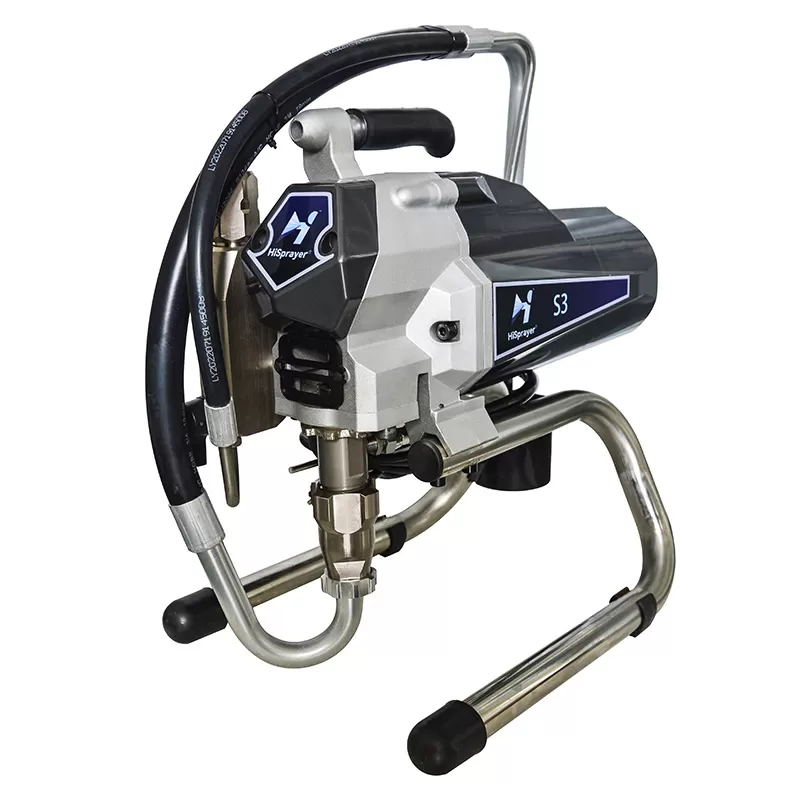
6. The HVBAN Edge: Precision Engineering Tested Globally
Building reliable high-pressure fluid equipment demands rigorous manufacturing control. HVBAN does not simply assemble off-the-shelf parts. With a dedicated manufacturing footprint spanning over 20 years, the company engineers its components from the metallurgical level upward.
Backed by more than 40 invention and utility model patents, HVBAN applies proprietary hardening techniques to dynamic fluid sections. Every machine undergoes multi-stage performance testing under continuous pressure to verify dimensional tolerances, electronic thermal regulation, and structural safety before shipment.
HVBAN products hold international CE certifications and adhere strictly to ISO9001 quality management systems. From cold-weather building insulation in Northern Europe to high-heat, high-humidity roofing installations in the Middle East and Southeast Asia, this equipment operates across more than 140 countries. Real-world feedback from these demanding climates fuels continuous design improvements on every pump revision.
Contractors gain more than durable machinery; they secure an engineering partnership that keeps high-pressure fluid lines running smoothly under demanding deadlines.
7. Frequently Asked Questions (FAQ)
Q1: Why is dynamic pressure more important than static pressure on
spray foam proportioners?
A1: Static pressure shows
line pressure when the spray gun trigger is closed. Dynamic pressure reveals
actual fluid behavior while chemical flows through the impingement chamber.
Pressure drops during spraying expose filter restrictions, pump packings wear,
or mismatched material viscosities that static readings mask entirely.
Q2: How does cold chemical impact spray foam application
equipment?
A2: Pumping chemicals below their
recommended application temperatures increases fluid viscosity exponentially.
This dynamic overload can cavitate transfer pumps, blow out fluid manifold
seals, induce internal mechanical slippage, and alter mixing stoichiometry,
resulting in uncured, sticky foam.
Q3: When should a contractor choose a hydraulic proportioner over an
electric model?
A3: Choose a hydraulic spray foam
machine when your work focuses on high-volume commercial projects, exterior
roofing, or continuous daily runs exceeding 1,500 pounds of chemical. Hydraulic
machines provide uninterrupted changeovers, superior heat dissipation, and the
mechanical endurance required for heavy production schedules.
Q4: How do I prevent isocyanate crystallization on fluid pump
rods?
A4: Ensure the wet-cup or packing lube
reservoir surrounding the isocyanate displacement rod is filled with compatible
throat seal liquid (TSL). This liquid forms an airtight boundary layer that
prevents atmospheric moisture from reacting with the isocyanate film on the rod,
protecting the dynamic shaft seals from abrasive damage.
Q5: What safety certifications should I look for in professional
high-pressure fluid transfer equipment?
A5: Look
for machinery manufactured under certified ISO9001 quality management standards
and bearing official European CE safety marks. These accreditations confirm that
electrical wiring, hydraulic containment systems, and high-pressure fluid
channels comply with rigorous international safety and engineering
protocols.
8. Take Control of Your Chemical Delivery Today
In high-pressure spray application, fluid control dictates overall profitability. Off-ratio foam wastes chemical stock, causes costly tear-outs, and leads to project delays. Outfitting your rigs with reliable machinery protects your margins and maintains strict architectural specifications on every job.
Explore HVBAN's field-tested lineup of professional plural component equipment, direct-feed proportioners, and airless fluid transfer solutions engineered for maximum jobsite reliability.
Contact our engineering solutions team today:
Email: mkt@fzhbgs.com | Export Sales Division
Website: www.hi-sprayer.com