
Commercial building standards are tightening worldwide. As contractors take on demanding cold storage facilities, sprawling flat-roof restorations, and strict energy-code insulation projects, machine reliability dictates project profit margins. Choosing the wrong machine brings off-ratio foam, blown seals, and costly project downtime.
Investing in dependable industrial machinery eliminates those field failures. If your business is actively evaluating current polyurethane foam spray equipment for sale, our technical team at HVBAN can assist you with system sizing, custom rig configurations, and direct factory pricing. Submit an equipment inquiry today to receive a comprehensive specification sheet and quote tailored to your application.
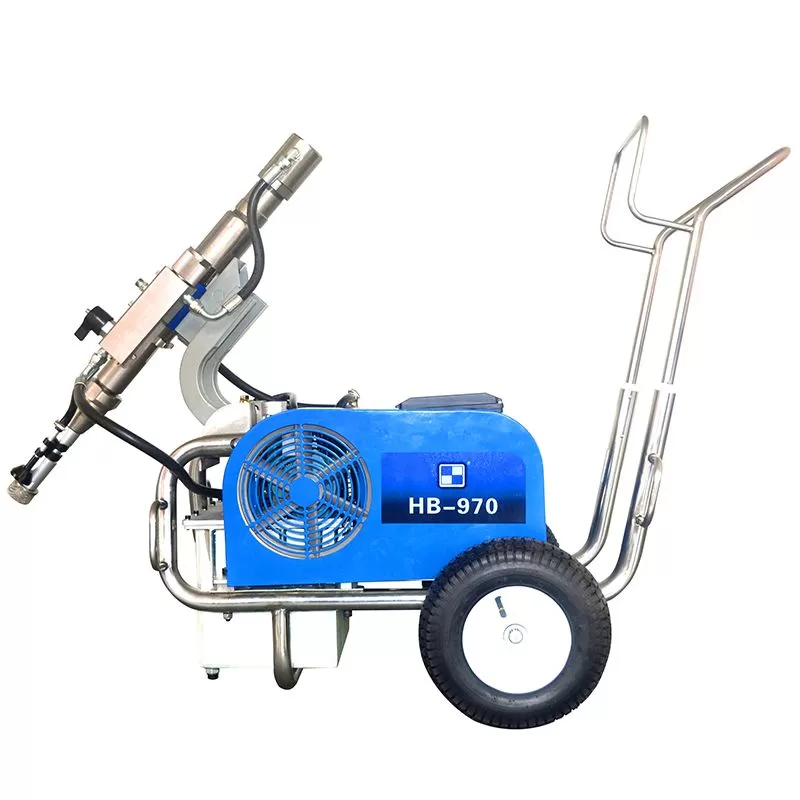
What Defines "Industrial-Grade" in Polyurethane Foam Spray Equipment?
Entry-level proportioners often run continuously at peak capacity on commercial jobsites, leading to rapid component breakdown. Industrial-grade plural-component machines, conversely, are engineered for nonstop continuous duty cycles in high-heat, high-humidity, and sub-zero weather conditions.
True commercial performance depends on three mechanical pillars:
- Drive System Architecture: Pneumatic systems handle light to mid-range residential spray tasks. However, high-production commercial contractors prefer hydraulic or high-torque electric drive proportioners. Hydraulic systems provide smooth pump reversals, eliminate pressure dips during gun triggers, and maintain consistent mixing chamber velocity.
- Pressure and Flow Stability: Industrial spray setups require fluid operating pressures between 2,000 and 3,500 PSI. This high pressure creates mechanical impingement mixing inside the spray gun chamber, eliminating the need for static mix nozzles.
- Thermal Transfer Capacity: Closed-cell chemical formulations demand sustained preheat temperatures up to 160°F (71°C). Industrial equipment features high-wattage hybrid fluid heaters (often 10 kW to 20 kW or higher) to condition high-viscosity resins before they travel down long hose runs.
- Extended Hose Reach: Industrial jobs require equipment capable of driving heated hose runs from 210 feet up to 410 feet without pressure drops or heat loss.
Industrial contractors must also align jobsite practices with safety and health regulations established by the Occupational Safety and Health Administration (OSHA), particularly regarding ventilation and respiratory protection during high-pressure chemical atomization.
Top High-Pressure Polyurethane Foam Spray Equipment for Sale: 2026 Picks
The market for plural-component machinery has matured. Equipment manufacturers now incorporate integrated electronics, brushless motor technology, and automated diagnostic sensors. Below is an engineering overview of the primary high-pressure classes currently available.
| Equipment Category | Drive Type | Max Pressure | Max Output | Best Suited Projects |
|---|---|---|---|---|
| Heavy Commercial Rig Unit | Hydraulic | 3,500 PSI (240 bar) | 30–45 lbs/min (13.6–20 kg/min) | Cold storage, industrial tanks, commercial roofing |
| Mobile Mid-Range Proportioner | Electric / Direct Drive | 2,500 PSI (172 bar) | 20–30 lbs/min (9–13.6 kg/min) | Multi-family residential, retail fit-outs, air barrier work |
| Smart Telematics Plural System | Hydraulic / Hybrid | 3,000 PSI (206 bar) | 25–35 lbs/min (11.3–16 kg/min) | Energy audit builds, large infrastructure, QA-heavy jobs |
1. The Heavy-Duty Hydraulic Workhorse: Best for Large-Scale Commercial Work
Hydraulic proportioners remain the benchmark for heavy commercial contractors. These machines utilize horizontal dual-acting pumps powered by a dedicated hydraulic fluid reservoir. This design virtually eliminates the transition hesitation during pump stroke changeovers.
Contractors spraying 40 to 60 drums of closed-cell foam per week favor hydraulic platforms because they withstand thousands of hours of run time with standard fluid changes. With maximum fluid pressures reaching up to 3,500 PSI, this category easily processes high-density polyurethanes as well as polyurea protective coatings.
2. The High-Efficiency Electric System: Balance of Output and Clean Power
Direct electric drive units eliminate the need for large auxiliary air compressors or complex hydraulic fluid reservoirs. Brushless electric motors drive mechanical cams or dual pistons with precise position encoders.
Leading manufacturers like HVBAN engineer integrated electric and electro-hydraulic proportioners that deliver smooth pressure outputs while drawing less overall jobsite power. Contractors operating within tight urban jobsites or mobile trailer setups benefit from the reduced weight, quiet operation, and lower generator kilowatt requirements.
3. The Smart Proportioner: Built for Data Tracking and Yield Control
Modern job specifications frequently require yield logging and ratio compliance records. The latest smart machines integrate high-precision flow meters and digital controllers directly into the fluid manifold.
These units shut down automatically if fluid pressures drift off-ratio by more than 5% to 10%, protecting contractors from liability associated with unreacted, uncured chemical pockets behind drywall. Data logging packages record chemical consumption, temperature history, and spray time, transmitting logs via cellular networks for billing and quality assurance.
Essential Components of a Complete Industrial Spray Foam Rig
The proportioning machine serves as the engine, but reliable execution requires a balanced, fully integrated system. Sourcing complete polyurethane foam spray equipment for sale means acquiring every component in the chemical path.
Every industrial-grade spray setup requires the following hardware components:
- The Proportioner (Main Unit): The central metering pump responsible for pressurizing, heating, and delivering the Isocyanate (A-side) and Polyol resin (B-side) at an exact 1:1 volumetric ratio.
- Plural-Component Spray Gun: Operators choose between air-purge, mechanical-purge, or solvent-purge spray guns. Air-purge guns dominate field preference due to minimal daily rebuild requirements and reliable high-pressure impingement mixing.
- Heated Hoses and Whip Line: High-pressure braided hoses feature built-in copper heating elements, RTD temperature sensors, and durable protective scuff jackets. A flexible 10-foot whip hose connects the main run to the gun to reduce applicator arm fatigue.
- Pneumatic Feed Pumps: Submerged 2:1 or 1:1 drum transfer pumps transfer viscous chemicals out of 55-gallon drums into the proportioner's primary pre-heaters without cavitating the high-pressure fluid section.
- Compressed Air and Desiccant Drying System: Moisture reacts violently with isocyanate, crystallizing into hard polyurea grit that destroys pump seals. An industrial refrigerated air dryer coupled with desiccant breathers on material drums prevents chemical contamination.
For more technical details on raw material chemistry, handling precautions, and application practices, review resources from the Spray Polyurethane Foam Alliance (SPFA) and the Center for the Polyurethanes Industry (CPI).
Cost vs. ROI: Investing in Industrial Polyurethane Spray Equipment
Purchasing commercial-grade application equipment requires significant capital. Understanding the initial purchase price against operating life reveals the real return on investment (ROI).
Prices vary based on automation, drive type, and heating capacity:
- Standalone Proportioners: Expect base machinery prices ranging between $15,000 and $45,000 depending on output rating, heating power, and drive configuration.
- Turnkey Rig Packages: Fully integrated 16-to-28-foot gooseneck trailers or box trucks outfitted with diesel generators, screw compressors, fluid pumps, barrel braces, and hose reels typically range from $65,000 to over $140,000.
Contractors recoup machinery costs quickly through three core operational factors:
- Chemical Yield Optimization: Precise digital temperature control ensures chemical expands to its full targeted board-footage yield. Achieving an extra 5% yield across 100 sets of foam pays back thousands of dollars in raw material costs alone.
- Minimizing Downtime: Industrial proportioners equipped with severe-duty fluid sections and non-contact pump shafts resist abrasive chemicals, avoiding costly mid-job breakdowns.
- Material Flexibility: Versatile high-pressure proportioners
can spray open-cell foam, closed-cell foam, and polyurea waterproofing coatings.
Contractors can bid on roof restorations in the summer and wall cavity
insulation in the winter using one rig.
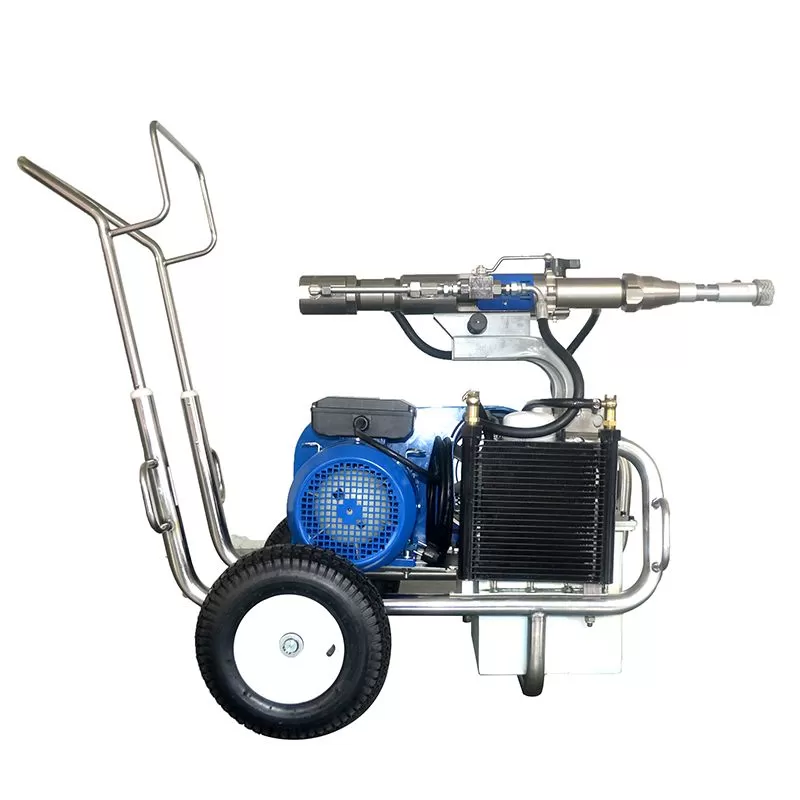
Industrial Buyer’s Checklist Before Purchase
Review this technical checklist before issuing a purchase order for equipment:
- Power Compatibility: Does your shop or mobile generator provide adequate 1-phase or 3-phase power? Verify total amp draw under full heater and motor load.
- Seal Composition: Ensure pump seals use chemical-resistant PTFE, UHMWPE, or specialized elastomer packages designed to resist aggressive blowing agents.
- Parts Availability and Field Service: Confirm that the manufacturer maintains an inventory of spray gun tips, mix chambers, heating elements, and packing kits with rapid shipping terms.
- Regulatory and Safety Compliance: Confirm that electrical enclosures, pressure relief valves, and mechanical components hold appropriate CE, UL, or regional industrial certifications.
Frequently Asked Questions (FAQs)
Q1: What is the main difference between low-pressure and high-pressure polyurethane spray equipment?
A1: Low-pressure systems operate below 500 PSI and utilize static mix nozzles or disposable mixing tips, making them suitable for small patch jobs. High-pressure systems operate between 1,500 and 3,500 PSI and rely on direct chemical impingement inside the gun chamber. This high-pressure process delivers superior cell structure, faster output, consistent yields, and handles high-viscosity commercial formulations.
Q2: Can I spray polyurea coatings using a polyurethane foam machine?
A2: Yes, provided the machine produces adequate pressure and heat. Polyurea elastomer coatings typically require sustained dynamic pressures of 2,500 to 3,500 PSI and temperatures up to 160°F–170°F. Verify that your proportioner fluid section and heating system meet the minimum technical requirements outlined on the polyurea chemical data sheet.
Q3: How much power does an industrial high-pressure spray foam machine require?
A3: Power requirements depend heavily on total heater wattage. Mid-sized industrial units typically require 30 to 50 amps on a 230V single-phase circuit, while large commercial proportioners running 20+ kW heaters may demand 60 to 90 amps on three-phase lines. Mobile rigs commonly rely on integrated 30 kW to 50 kW diesel generators to power the proportioner, compressor, and auxiliary tools simultaneously.
Q4: How do I prevent ISO crystallization in high-pressure proportioners?
A4: Isocyanate reacts with atmospheric moisture to form hard crystals. To prevent system damage, always use desiccant air dryers on the ISO supply drum, maintain clean pump lube (TSO oil) reservoirs on the pump shaft wet-cups, flush lines properly during extended storage, and replace pump packings at recommended service intervals.
Q5: What is the typical lifespan of an industrial spray foam proportioner?
A5: A well-maintained hydraulic or industrial electric proportioner can operate for 10 to 15 years or more. Fluid seals, O-rings, and gun mixing chambers are consumable wear parts that require routine replacement, but the primary drive frames, hydraulic blocks, and electrical structures are engineered for long-term commercial duty.
Get Factory Direct Specifications & Pricing
Selecting the right machinery forms the foundation of a successful insulation contracting business. Whether you are expanding your commercial fleet or upgrading older machinery to modern high-pressure standards, having rugged, field-tested equipment is critical to your bottom line.
HVBAN manufactures dependable plural-component spray systems, high-pressure pumps, and commercial fluid application equipment designed for heavy jobsite use. Contact our technical team today to discuss your target project size, material choices, and custom rig configurations.
Ready to purchase or customize your system? Contact our commercial equipment specialists today to review our complete range of polyurethane foam spray equipment for sale, request a digital product catalog, and secure a detailed investment estimate.