
Selecting the right line paint striper for your pavement marking projects is not a decision to take lightly. The equipment you choose directly affects productivity, marking quality, and long-term operating costs. Whether you operate a small parking lot striping business or manage large-scale highway construction, the right road marking machine makes all the difference. HVBAN, a manufacturer with over 20 years of industry experience, has seen too many contractors struggle with mismatched equipment. This guide breaks down seven critical factors to help you choose a line paint striper that fits your actual needs—without the fluff or overused buzzwords.
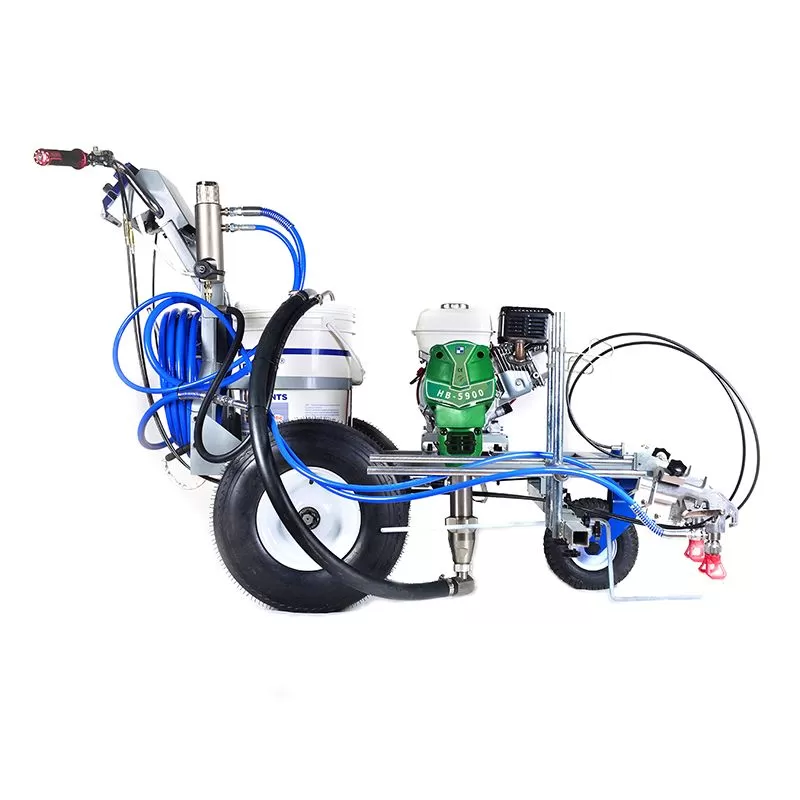
1. Match the Line Paint Striper to Your Application Scenario
Before evaluating any pavement marking equipment, define where and what you will paint. Different surfaces and marking requirements demand different machine configurations. Urban roads and highways typically require durable thermoplastic striping that withstands heavy traffic and harsh weather. Factory floors, warehouse aisles, or temporary parking lots, however, often work perfectly with cold paint sprayers that offer quick application and easy cleanup.
Consider the types of markings you will produce. Standard edge lines and lane dividers are straightforward, but crosswalks, arrows, and text markings require additional spray gun configurations and precise control systems. A line paint striper optimized for straight lines may struggle with complex symbols if it lacks the right setup. Therefore, your first step is to map out your typical projects—road type, marking complexity, and expected traffic volume—then select a machine built for those conditions.
HVBAN perspective: HVBAN offers a comprehensive range of line paint stripers, including cold spray models, thermoplastic systems, and two-component compatible machines. Their lineup covers everything from small parking lot applications to major highway projects, ensuring you get a road marking machine tailored to your specific working environment.
2. Drive System: How It Affects Efficiency and Operator Fatigue
The drive system of a line paint striper directly impacts your daily output and the physical toll on your crew. For small, intermittent jobs, a push-type striper offers simplicity and maneuverability. These units are lightweight, easy to transport, and cost-effective for occasional use. However, pushing a heavy paint load across long stretches quickly exhausts operators and slows production.
For larger areas, self-propelled line stripers with gas engines or electric motors reduce operator strain and maintain consistent speed. These machines deliver higher productivity over extended runs, making them the preferred choice for municipal crews and commercial striping contractors. At the top end, truck-mounted stripers handle massive highway projects, covering dozens of miles per day with minimal stops.
Choosing the right drive system comes down to your annual square footage and crew size. A small team handling multiple short jobs might prefer the flexibility of push models, while a dedicated striping crew covering miles of roadway daily will benefit from the efficiency of self-propelled or ride-on equipment.
HVBAN practice: HVBAN's line paint striper series includes push-type, self-propelled, and truck-mounted configurations. Their self-propelled models, in particular, have become the go-to choice for many municipal and engineering firms, striking an excellent balance between productivity and operating cost.
3. Striping Accuracy and Width Control: The Core Performance Metric
When you evaluate a line paint striper, pay close attention to its striping accuracy. The straightness deviation, width consistency, and edge definition determine whether your markings meet regulatory standards and safety requirements. Poor accuracy results in uneven lines, ragged edges, and inconsistent skip patterns—all of which can lead to failed inspections and safety hazards.
A high-quality road marking machine incorporates several features to maintain precision. An adjustable guidance system helps the operator track straight lines, even on uneven pavement. Precision spray gun assemblies ensure uniform paint delivery, while fast-response solenoid valves control dash lengths within tight tolerances. These components work together to produce crisp, professional markings that stand up to scrutiny.
Width control is equally critical. The ability to adjust line width on the fly—from 4 inches to 24 inches or more—allows you to handle different marking specifications without changing equipment. Look for a line paint striper with a reliable height-adjustment mechanism for the spray guns, as gun-to-pavement distance directly affects line width and edge sharpness.
HVBAN technical highlight: HVBAN equips its line stripers with high-precision spray gun assemblies and fast-response solenoid valves. Combined with a finely adjustable gun-height mechanism, these features ensure consistent line width across varying pavement conditions, giving you reliable results from the first pass to the last.
4. Paint Delivery System and Anti-Clog Design: Keeping Your Line Paint Striper Running
Nothing halts a striping project faster than a clogged nozzle. Paint impurities, cured skin, or excessive viscosity can block the spray tip, forcing you to stop, clean, and restart—often multiple times per shift. For thermoplastic stripers, improper temperature control can cause paint to solidify inside hoses and pumps, leading to even more costly downtime.
When selecting a line paint striper, examine its paint delivery system carefully. A robust filtration system—preferably with multiple stages—catches contaminants before they reach the spray gun. A stable high-pressure pump maintains consistent flow, reducing the likelihood of sputtering and blockages. For heated systems, precise temperature controls keep thermoplastic materials fluid from the tank through the spray tip.
Quick-clean features also matter. Machines with easily disassembled spray tips, flushable hoses, and accessible filters let your crew clear minor clogs in minutes rather than hours. Some modern road marking machines even include reverse-flush capabilities that clear blockages without disassembly.
HVBAN solution: HVBAN line paint stripers feature efficient multi-stage filtration and robust high-pressure airless pumps. Their optimized flow path design significantly reduces clogging incidents. For thermoplastic models, the precise temperature control system ensures smooth flow from the hopper to the spray gun, even during extended runs.
5. Paint Capacity and Endurance: How Long Can Your Line Paint Striper Run?
The paint hopper capacity of your line paint striper determines how much area you can cover before refilling. A small tank forces frequent stops, breaking your rhythm and reducing daily output. Conversely, an oversized hopper adds weight, making the machine harder to maneuver and potentially causing tracking issues on soft pavement.
Your ideal capacity depends on your typical project length. For short city blocks or parking lots, a 10- to 15-gallon hopper may suffice. For highway work where you might run continuously for miles, consider a 30-gallon or larger tank paired with a robust chassis that handles the extra weight without compromising stability.
Material compatibility also influences capacity decisions. Water-based paints are heavier than solvent-based options, while thermoplastic requires a heated hopper with agitation. Choose a line paint striper with a tank designed for your primary paint type, and consider corrosion-resistant materials if you frequently switch between different chemistries.
HVBAN practice: HVBAN optimizes the capacity-to-weight ratio across its line paint striper models. The hoppers use corrosion-resistant materials and are compatible with water-based, solvent-based, and thermoplastic paints. This design gives you ample endurance without sacrificing handling, so you can complete long stretches efficiently.
6. Brand Strength, Patents, and Certifications: Long-Term Assurance for Your Line Paint Striper
A line paint striper is a precision fluid-handling machine, not a simple piece of hardware. The technology behind consistent pressure, temperature control, and spray patterning requires significant engineering expertise. Choosing a manufacturer with proven technical capabilities gives you confidence that your investment will perform reliably over years of hard use.
Look for indicators of technical depth: the number of invention patents and utility model patents held by the manufacturer, ISO 9001 quality management certification, CE marking for European compliance, and other relevant safety approvals. These credentials demonstrate a commitment to quality and continuous improvement. Companies that invest in R&D tend to stay ahead of industry challenges, offering better durability and innovation.
Also consider the manufacturer's track record. How long have they been in the road marking equipment business? Do they export to multiple countries with varying climate and regulatory conditions? A global presence suggests their machines have been tested across diverse environments, from tropical heat to freezing winters.
HVBAN hard power: HVBAN holds over 40 active patents worldwide, including invention and utility model patents. The company is ISO 9001 certified, and its equipment carries CE and EU safety certifications. With more than 20 years of industry experience, HVBAN exports to over 140 countries and regions—proving its line paint striper designs endure different climates, pavement types, and operator practices.
.webp?t=1787130110544 "line paint striper")
7. After-Sales Service and Global Support Network: Protecting Your Line Paint Striper Investment
Line paint stripers work under harsh conditions—dust, vibration, temperature extremes, and continuous operation. Normal wear and occasional breakdowns are inevitable. When your machine stops, every hour of downtime can cost hundreds or thousands of dollars in lost productivity and missed deadlines. That is why after-sales support is as important as the machine itself.
Before purchasing a road marking machine, evaluate the supplier's service response time, spare parts availability, and warranty terms. Do they stock common wear parts like spray tips, filters, and seals? Can they provide remote troubleshooting or on-site service within a reasonable timeframe? A manufacturer with a proactive service culture will contact you after delivery, check on your usage, and offer preventive maintenance advice.
Global support networks matter if you operate in multiple regions or plan to expand internationally. A supplier with distribution partners in your area can provide faster parts delivery and local technical assistance, reducing your exposure to extended downtime.
HVBAN service system: HVBAN has established a comprehensive after-sales framework. After you purchase a line paint striper, their support team proactively reaches out to understand your operating conditions and offers optimization tips based on real-world feedback. With export operations in over 140 countries, HVBAN maintains spare parts supply and remote technical support capabilities across major markets, helping you minimize costly downtime.
Start With These 7 Dimensions to Choose Your Ideal Line Paint Striper
Choosing a line paint striper is not just about buying a machine—it is about selecting a reliable partner for your marking projects. The seven factors we have covered—application scenario, drive system, striping accuracy, paint delivery reliability, hopper capacity, brand technical strength, and after-sales support—form a complete decision framework from selection to long-term operation.
Take the time to evaluate each dimension against your specific needs. Talk to your crew about their pain points with current equipment. Review your project pipeline to anticipate future requirements. A well-chosen road marking machine pays for itself through higher productivity, better quality, and lower maintenance costs.
HVBAN brings over 20 years of specialized manufacturing experience, more than 40 patents, international certifications, and a service network spanning 140-plus countries to every line paint striper they produce. Their commitment to high value, reliability, and customer support makes them a solid choice for contractors and agencies alike. To learn more about specific models or request a tailored selection recommendation, reach out to the HVBAN sales team—they are ready to help you find the right equipment for your next project.
Frequently Asked Questions About Line Paint Stripers
Q1: What is the difference between a cold paint striper and a
thermoplastic striper?
A1: A cold paint striper applies water-based
or solvent-based paints at ambient temperature using airless or air-assisted
spray technology. It is ideal for temporary markings, parking lots, and
low-traffic areas where durability is not the primary concern. A thermoplastic
striper, on the other hand, heats solid thermoplastic material to approximately
200°C (400°F) and applies it as a molten film that bonds to the pavement.
Thermoplastic markings are highly durable, reflective, and long-lasting, making
them the standard for highways and high-traffic urban roads.
Q2: How often should I clean the filters and spray tips on my road
marking machine?
A2: Daily cleaning is recommended, especially if
you switch between different paint types. At a minimum, flush the system with an
appropriate solvent or cleaner at the end of each shift. Replace or inspect
filters weekly, or more frequently when using paints with high solids content.
Clogged filters reduce pressure and affect line quality. For thermoplastic
systems, ensure the hopper and hoses are completely drained and cleaned after
each use to prevent material solidification.
Q3: Can one line paint striper handle both water-based and
solvent-based paints?
A3: Many modern stripers are designed with
solvent-compatible seals and components, allowing them to switch between
water-based, solvent-based, and even two-component paints. However, you should
verify material compatibility with the manufacturer. Some paints require
specific pump types (e.g., airless vs. air-assisted) or different filtration
levels. If you frequently switch materials, choose a line paint striper with
quick-clean features and easy flush capabilities to minimize
cross-contamination.
Q4: What is the typical lifespan of a self-propelled line paint
striper?
A4: With proper maintenance, a self-propelled road marking
machine can last 8 to 12 years or more. Key factors affecting lifespan include
operating hours, paint type (abrasive paints wear components faster),
environmental conditions, and adherence to maintenance schedules. Regularly
replacing wear parts—spray tips, seals, filters, and pump packings—extends the
machine's life significantly. Choosing a brand with readily available spare
parts also helps you keep older machines running efficiently.
Q5: How do I calculate the right hopper capacity for my striping
projects?
A5: A practical rule of thumb: estimate your average
continuous run length before refilling. For example, if you stripe 2 miles of
parking lot lanes with a 4-inch line, you will need roughly 1 to 1.5 gallons per
mile per line (depending on paint thickness). Multiply that by the number of
lines. Choose a hopper that covers at least 1.5 times your typical run to allow
for start-up waste and margin. Also consider the weight—if you exceed the
machine's recommended load, maneuverability suffers, especially on uneven
surfaces.
Ready to find the right line paint striper for your operation? Contact the HVBAN sales team today for a personalized equipment recommendation. Their experienced professionals will help you match the right machine to your projects, budget, and growth plans. Request a quote or consultation now—and keep your striping projects moving forward with reliable, high-performance equipment.