
In industrial coating operations, the high pressure paint gun remains a cornerstone of efficient, high-quality surface finishing. Unlike low-pressure or airless alternatives, these systems operate at fluid pressures typically ranging from 1,500 to 4,500 psi, delivering precise atomization and superior transfer efficiency. For manufacturing engineers and production managers, understanding the mechanical behavior, material compatibility, and process parameters of a high pressure paint gun directly impacts throughput, coating uniformity, and total operational cost.
This analysis examines the engineering principles governing high pressure paint gun performance, addresses common application challenges in heavy-duty industrial environments, and provides a structured framework for equipment selection and maintenance optimization. The discussion draws from field data, fluid mechanics theory, and material science considerations relevant to continuous production lines.
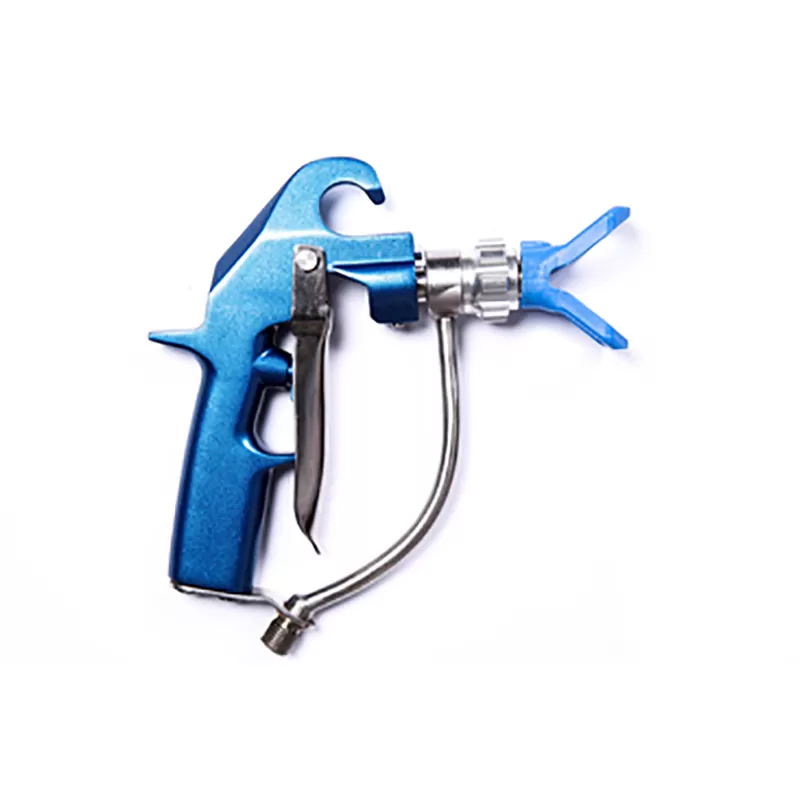
Operating Principles of High Pressure Paint Gun Systems
At the core of every high pressure paint gun is a hydraulic amplification mechanism that converts compressed air or electric motor input into fluid pressure sufficient to overcome viscous resistance and surface tension. The pressure generation stage typically employs a piston pump or diaphragm pump with a compression ratio between 15:1 and 65:1, depending on the coating material's viscosity and the desired flow rate.
Fluid exiting the nozzle undergoes primary and secondary atomization. Primary atomization occurs as the pressurized fluid passes through a precisely machined orifice, creating a high-velocity liquid sheet. Secondary atomization results from interaction with the surrounding air—either through air-assist channels or through the turbulent breakup of the fluid jet. For a high pressure paint gun equipped with air-assist capability, the synergistic effect of hydraulic pressure and shaping air produces a spray pattern with controlled droplet size distribution, typically in the 15–40 micron range for most industrial coatings.
Key mechanical components that determine system reliability include:
Fluid nozzle and needle assembly – constructed from tungsten carbide or stainless steel to resist abrasion from pigmented coatings
Piston rod seal pack – utilizes U-cup or V-stack configurations with PTFE or polyurethane elements to prevent fluid bypass at high pressures
Pressure regulator with dampening accumulator – minimizes pulsation artifacts that cause orange peel or mottling in the finished film
Fluid filter mesh – typically 60–200 mesh, positioned upstream of the gun inlet to trap agglomerates and contaminants
These components must be matched to the specific coating chemistry. For instance, abrasive ceramic-filled primers require hardened nozzle geometries, while moisture-curable urethanes demand seal materials with low permeability to atmospheric vapor.
Application Parameters and Coating Quality Determinants
Industrial applications of high pressure paint gun technology span automotive refinishing, marine coatings, aerospace primer application, and heavy equipment manufacturing. Each sector imposes distinct requirements on spray parameters. Automotive clearcoat applications prioritize atomization fineness and leveling behavior, while marine antifouling coatings emphasize film build and edge retention.
Critical process variables that influence final coating quality include:
Fluid pressure setpoint – determines initial velocity and breakup energy; higher pressures reduce droplet size but increase overspray
Fluid flow rate (cc/min) – controlled by needle stroke adjustment and orifice diameter; affects wet film thickness per pass
Spray angle and fan width – governed by air cap design and shaping air pressure; impacts overlap consistency and edge coverage
Standoff distance – typically 8–12 inches for most high pressure paint gun configurations; deviations alter impact velocity and transfer efficiency
Ambient temperature and relative humidity – influence solvent evaporation rate and film flow characteristics
Transfer efficiency—the proportion of coating material that adheres to the substrate—is a primary metric for evaluating high pressure paint gun performance. Modern systems with optimized air cap designs achieve transfer efficiencies of 65–75% in manual operation and up to 85% in automated reciprocator installations. This efficiency translates directly to material savings and reduced VOC emissions, making it a focal point for both cost and environmental compliance strategies.
Fluid Pressure vs. Atomization Quality Trade-offs
Operating a high pressure paint gun at elevated pressures improves atomization but introduces several practical trade-offs. Higher pressures generate increased fluid velocity at the nozzle, which can cause a phenomenon known as "tailing"—an uneven distribution of larger droplets at the spray pattern's edges. This effect becomes more pronounced with higher-viscosity coatings unless the nozzle design incorporates specific turbulence-inducing features.
Conversely, reducing pressure to minimize overspray may result in incomplete atomization, producing a coarse texture and poor substrate wetting. The optimal pressure range for a given coating and substrate combination is best established through systematic testing, using a combination of viscosity measurements, spray pattern analysis, and dry film thickness profiling. Industry practice often recommends starting at the manufacturer's baseline pressure and adjusting in 100-psi increments while observing pattern uniformity and film appearance.
Industrial Pain Points and Engineering Solutions
Production environments impose severe operational demands on high pressure paint gun systems. Common failure modes and their root causes provide insight into maintenance strategies and component selection criteria.
Fluid leakage at the packing gland – This condition typically indicates worn piston seals or excessive side loading on the pump rod. In continuous operation, seal wear accelerates when coatings contain hard fillers (aluminum oxide, silica) or when the gun is cleaned with aggressive solvents that degrade elastomer compounds. A practical countermeasure involves implementing a preventive seal replacement schedule based on cumulative fluid volume processed, rather than calendar time. HVBAN's seal kits, designed with proprietary polyurethane blends, demonstrate extended service life in abrasive service conditions, reducing unplanned downtime.
Inconsistent spray pattern width – Pattern fluctuation often arises from clogged air cap holes or pressure pulsation from an inadequately dampened pump. Installing an inline pulsation damper, sized for the system's flow rate and pressure range, attenuates pressure spikes. Routine air cap cleaning using appropriate brass or nylon brushes preserves orifice geometry and maintains pattern symmetry.
Orange peel and micro-bubbles – These surface defects originate from improper pressure settings or contamination in the fluid supply. Micro-bubbles typically indicate air entrainment in the fluid line, often caused by a loose inlet connection or a cavitating pump at low NPSH (Net Positive Suction Head). Installing a vacuum-degassing vessel upstream of the pump eliminates dissolved air, while maintaining fluid temperature within the coating manufacturer's specified range reduces viscosity variations that contribute to bubble formation.
Material Compatibility and Fluid Path Design
The fluid path of a high pressure paint gun must be compatible with the chemical composition of the coating. Solvents such as methyl ethyl ketone, toluene, and xylene, commonly found in industrial primers, can swell or dissolve standard elastomer seals. Similarly, waterborne coatings require corrosion-resistant materials—typically 316 stainless steel or electroless nickel-plated components—to prevent rust contamination. For high-solid coatings with viscosities exceeding 60 seconds Zahn #4, heated fluid delivery systems reduce viscosity without solvent addition, enabling consistent atomization at moderate pressures.
When specifying a high pressure paint gun for a particular coating line, the fluid nozzle diameter and needle taper should be selected based on flow rate requirements. A general guideline: for flow rates between 150 and 300 cc/min, a 0.015-inch to 0.019-inch nozzle diameter is appropriate; for rates above 400 cc/min, 0.021-inch to 0.025-inch nozzles maintain stable atomization without excessive pressure drop.
Selection Criteria for High Pressure Paint Gun Equipment
Choosing the appropriate high pressure paint gun for an industrial application involves evaluating multiple interrelated factors. The decision matrix should include coating type, production volume, operator skill level, and available compressed air capacity.
For manual spray booths where operator fatigue is a concern, lightweight gun bodies (aluminum or composite) with balanced ergonomics reduce strain during extended shifts. For robotic or reciprocating installations, the mounting interface, trigger actuation method (pneumatic or solenoid), and cycle life become primary considerations. In both cases, the gun's ability to maintain consistent fluid delivery under varying back-pressure conditions is critical for film build uniformity.
Coating viscosity range – Low-viscosity stains (20–30 sec Zahn #4) require smaller nozzle orifices to prevent excessive flow; high-viscosity sealers (50–70 sec) require larger orifices and higher pressures.
Production duty cycle – Intermittent use allows for manual cleaning protocols; continuous 24/7 operation necessitates automated flush systems and quick-change fluid tips.
Environmental regulations – Compliance with VOC emission limits may favor high-transfer-efficiency designs and reduced overspray characteristics.
Maintenance accessibility – Quick-disconnect fluid couplings and tool-less seal replacement reduce mean time to repair (MTTR).
HVBAN offers a modular high pressure paint gun platform that accommodates interchangeable nozzle sets and seal configurations, allowing production lines to adapt to varying coating formulations without replacing the entire spray system. This approach reduces inventory costs and simplifies operator training.
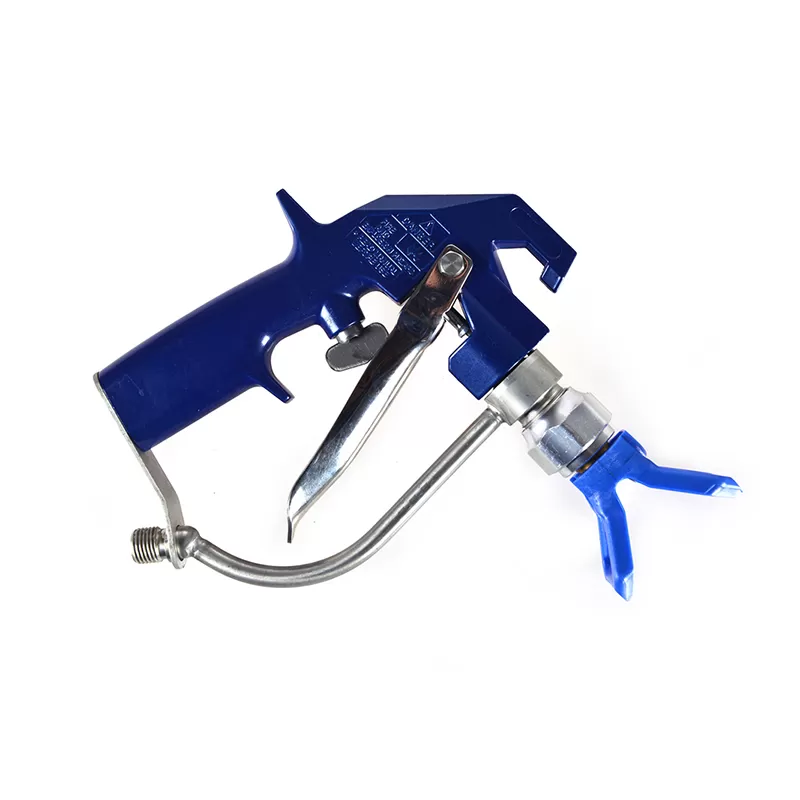
Maintenance Protocols and Operational Safety
Systematic maintenance of high pressure paint gun equipment extends component life and preserves coating quality. A structured program includes daily, weekly, and monthly inspection tasks.
Daily procedures – Flush the fluid path with appropriate solvent after each shift; inspect the air cap and fluid tip for dried coating buildup; verify the pressure gauge calibration against a known reference standard; check all threaded connections for evidence of weeping or seepage.
Weekly procedures – Disassemble and clean the fluid filter; lubricate the trigger pivot point and needle packing with manufacturer-recommended grease; inspect the air hose for cuts or abrasion; test the gun's safety lock mechanism to ensure it engages correctly.
Monthly procedures – Replace the piston seal and needle packing if cumulative usage exceeds 500 gallons of coating; measure and record fan pattern width at standard pressure; examine the nozzle orifice for wear using a calibrated pin gauge; verify the pressure regulator's response time by introducing a step change in supply pressure and observing settling behavior.
Safety considerations for high pressure paint gun operation are paramount. Fluid pressures of 3,000 psi or higher present a severe injection injury risk—fluid penetrating the skin requires immediate surgical intervention. Operators must wear cut-resistant gloves and safety glasses with side shields. The gun must never be pointed at any part of the body, and the trigger safety should be engaged whenever the gun is not actively spraying. During cleaning operations, pressure should be relieved by triggering the gun into a grounded waste container before any disassembly.
Frequently Asked Questions
What is the typical operating pressure range for a high pressure paint gun in industrial finishing?
Industrial high pressure paint guns typically operate between 1,500 and 4,500 psi. The specific setpoint depends on coating viscosity, desired flow rate, and atomization quality. Heavier coatings such as high-build primers or elastomeric materials often require pressures above 3,000 psi, while thinner stains and sealers may perform optimally at 1,800–2,200 psi. Pressure selection should be validated through spray pattern testing and film thickness measurements for each specific application.
How does nozzle wear affect high pressure paint gun performance and coating quality?
Nozzle wear increases the orifice diameter over time, which reduces fluid velocity and disrupts atomization. The spray pattern becomes coarser, with larger droplets that do not break up properly, leading to orange peel texture and reduced transfer efficiency. In severe cases, wear causes asymmetric patterns due to non-circular orifice geometry. Replacing nozzles based on cumulative throughput—typically every 200–400 gallons of coating—prevents quality degradation. Regular inspection with a magnifying glass and bore gauge helps detect wear before it affects production.
Can a high pressure paint gun be used with waterborne coatings without modifications?
Waterborne coatings require high pressure paint gun components that resist corrosion and are compatible with the alkaline pH of many waterborne formulations. Standard carbon steel components must be replaced with stainless steel or specially coated aluminum. Additionally, the fluid path should be free of zinc or cadmium plating, which can react with waterborne resins. Seal materials must be selected for resistance to water and the specific cosolvents used. Consulting the coating manufacturer's equipment compatibility guide is recommended before using waterborne materials.
What is the recommended method for cleaning a high pressure paint gun between color changes?
An efficient cleaning procedure involves three stages: first, flush the fluid path with a compatible solvent at reduced pressure (300–500 psi) to dissolve residual coating; second, disassemble the fluid tip, needle, and air cap for manual cleaning with a brush and solvent; third, reassemble and perform a verification spray onto test paper to confirm pattern quality. Using a dedicated cleaning station with a closed-loop solvent recovery system minimizes VOC exposure and solvent consumption. Avoid using metal scrapers or abrasive pads on precision ground surfaces.
How does ambient temperature influence high pressure paint gun atomization?
Temperature affects coating viscosity directly—as temperature rises, viscosity decreases, reducing the pressure required for atomization. Conversely, cold coatings (below 60°F) thicken, requiring higher pressures or causing incomplete atomization. In cold environments, heated paint circulation systems maintain viscosity stability. Additionally, temperature gradients along the fluid hose can cause pressure variations; insulated hoses and controlled booth temperatures mitigate this effect. Operators should monitor coating temperature at the gun inlet to ensure consistency.
What are the signs of seal failure in a high pressure paint gun, and how urgently should they be addressed?
Signs include visible fluid leakage from the packing nut, erratic pressure readings, inconsistent spray patterns, and air bubbles in the fluid stream. Seal failure allows fluid bypass, reducing the effective pressure at the nozzle and causing quality defects. More critically, bypassing fluid can contaminate the air side of the gun, leading to clogging of air cap passages. Seal replacement should be performed immediately upon detection of leakage to prevent damage to adjacent components and to avoid production of non-conforming parts.
Is it possible to retrofit an existing high pressure paint gun with a different nozzle size for a new coating application?
Yes, most professional-grade high pressure paint guns are designed with interchangeable nozzle and needle assemblies. Retrofitting involves selecting a nozzle diameter and needle taper that match the new coating's viscosity and flow requirements. The gun's fluid passage and seal configuration must remain compatible with the new coating chemistry. Retrofitting is more cost-effective than purchasing a new gun, provided that the existing gun's pressure rating and flow capacity are adequate for the new application. Consult the gun manufacturer's compatibility chart for approved retrofit kits.
For technical specifications, application engineering support, or to request a demonstration of HVBAN high pressure paint gun systems, contact our industrial finishing specialists at mkt@fzhbgs.com or call 0086-591-87913317. Our engineering team provides on-site pressure optimization and maintenance training for production facilities.