
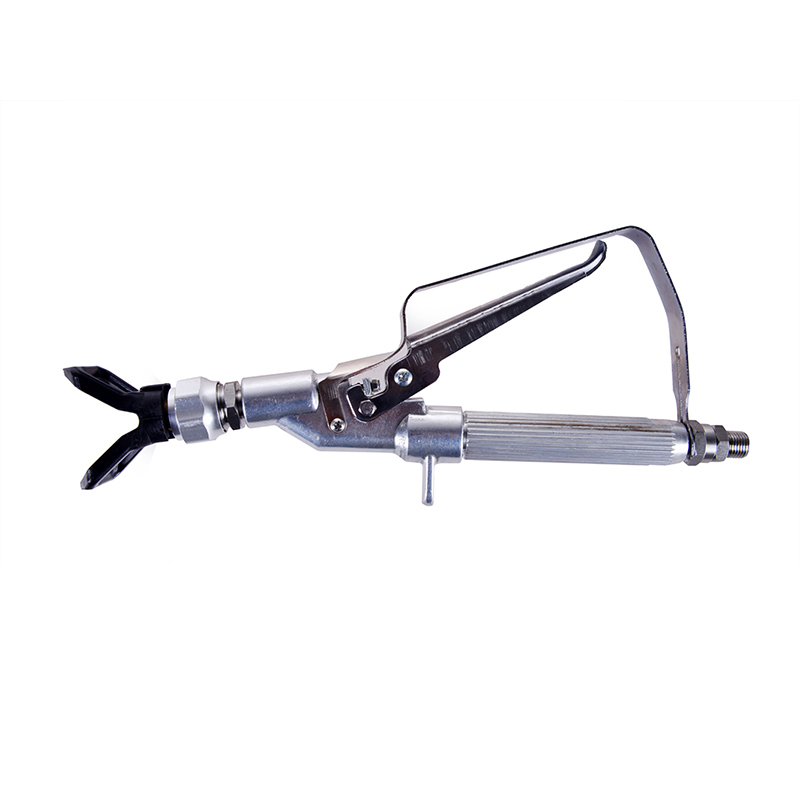
Passive fire protection in commercial construction and industrial infrastructure relies on precise material application to prevent structural steel from losing integrity during high-temperature exposure. Delivering dense cementitious mortars and thick-film reactive coatings to structural members demands machinery engineered for abrasive, viscous slurries. Selecting and operating an industrial-grade fireproofing spray machine requires a deep evaluation of pumping dynamics, fluid delivery rates, continuous mixing integrations, and line pressure parameters across extreme vertical runs.
Fluid Dynamics and Mechanical Pumping Systems for Fire Protection
Materials
Pumping passive fireproofing compounds presents unique mechanical challenges due to the diverse rheology of the materials applied. Equipment must maintain uniform output across varying viscosities while resisting mechanical wear from coarse aggregates.
Cementitious Slurries Versus High-Solids Intumescents
Passive fire protection formulations fall primarily into two categories, each requiring distinct mechanical conveyance methods:
Cementitious Passive Fireproofing (PFP): These materials combine gypsum or Portland cement binders with lightweight aggregates such as vermiculite or perlite. Cementitious slurries exhibit high thixotropy and non-Newtonian flow behavior. The pump must move dense, abrasive mixes without shearing the aggregate or causing phase separation between water and solids under hydrostatic pressure.
Intumescent Fire-Resistive Coatings (Thin-Film and Thick-Film): Intumescent systems consist of epoxy or vinyl binders loaded with acid donors, carbonific agents, and expanding blowing additives. Solvent-free and 100% solids epoxy intumescents exhibit extreme yield stress and viscosity. Applying these compounds requires high fluid delivery pressures to achieve smooth atomization and build accurate Wet Film Thickness (WFT) without solvent thinning.
Rotor-Stator Displacement Mechanics
For low-, medium-, and high-density cementitious mortars, progressive cavity (rotor-stator) pumping systems serve as the standard mechanical architecture. A chrome-plated alloy steel rotor turns eccentrically within an elastomer stator, creating moving cavities that advance the material forward at a rate proportional to drive shaft rotation.
This positive displacement design delivers steady volumetric flow with minimal pulsation, preserving the aggregate matrix. The constant cavity volume prevents aggregate compaction, which otherwise leads to pack-outs in high-friction delivery lines.
Direct Hydraulic Piston Pumping
High-viscosity intumescent compounds and dense exterior-grade mortars demand positive displacement hydraulic piston pumps. Manufacturers like HVBAN engineer heavy-duty hydraulic drives to manage these extreme shear stresses, cycling long-stroke fluid sections that draw heavy pastes directly from bulk containers.
Hydraulic power packs provide uniform stroke transition speeds, preventing the pressure drop at stroke changeover that commonly causes uneven film builds when spraying high-build coatings.
Mechanics of Slurry Delivery and Air-Assisted Atomization
Pumping mixed fireproofing materials from ground level to high-rise building frameworks requires calculated fluid engineering to counter friction losses and line resistance.
Managing Line Loss, Hose Diameter, and Vertical Head
Frictional resistance inside the delivery line increases proportionally with hose length, internal hose roughness, slurry viscosity, and pumping velocity. Long-distance material transfer requires step-down hose configurations to balance fluid velocity against pump backpressure:
Main Delivery Runs: A 2-inch to 1.5-inch internal diameter (ID) heavy-duty mortar hose minimizes boundary-layer drag over long horizontal and vertical runs.
Whip Hoses: A 1-inch or 0.75-inch ID whip line placed at the final 10 to 15 feet provides the applicator with manual control without generating unacceptable backpressure on the pump manifold.
Hydrostatic Head Pressure: Pumping vertically introduces static head pressure equal to fluid density multiplied by gravity and vertical elevation. A standard cementitious slurry with a specific gravity of 1.3 adds substantial head pressure, which the pump motor and drive gear must overcome before material reaches the spray tip.
Air-Assisted Atomization Dynamics at the Spray Pole
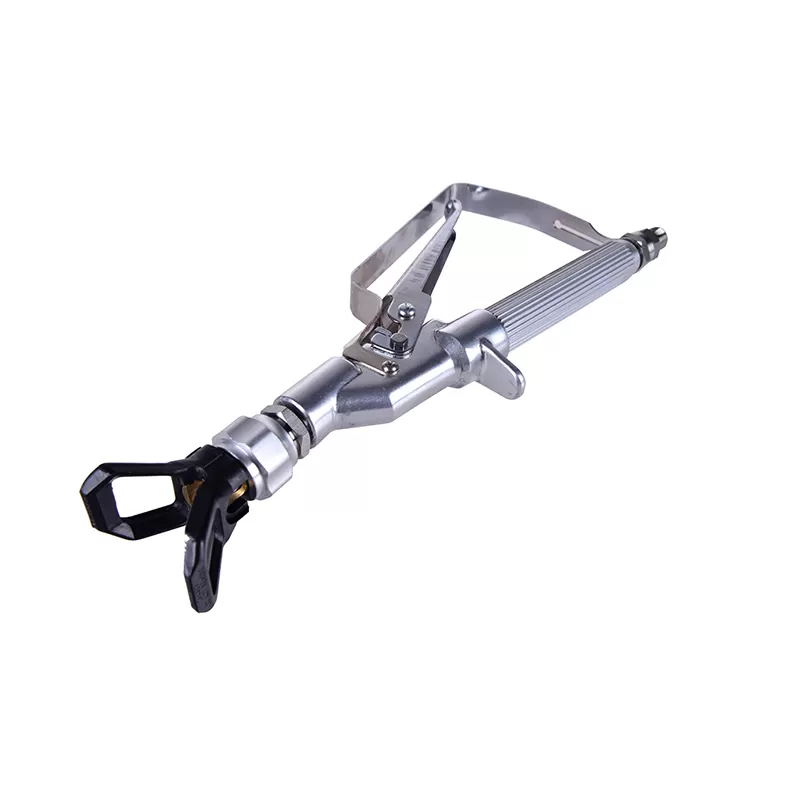
Unlike airless paint sprayers that rely entirely on hydraulic fluid velocity to break apart fluid streams, heavy mortar application requires external compressed air injected directly into the nozzle head. The slurry passes through a smooth, open-throat orifice while high-volume, low-pressure (HVLP) compressed air shears the exiting column into a uniform conical pattern.
Achieving a uniform spray pattern requires balancing fluid output volume with air volume (measured in CFM). Insufficient air volume creates a coarse, clumpy spray profile with poor substrate adhesion and heavy rebound loss. Excessive air velocity atomizes the mix too finely, causing material bounce-back, hollow pockets within the thermal barrier, and high dry aggregate fallout.
Machinery Specifications and Selection Criteria for Heavy Commercial Projects
Matching equipment to project specifications prevents site downtime, out-of-spec thicknesses, and mechanical strain. Modern fluid handling setups from HVBAN integrate modular pump components to handle variable aggregate sizes and different jobsite power configurations.
Drive Power Configurations
Site infrastructure determines the drive architecture for the pumping assembly:
Electric Drives: Variable-speed electric motors paired with frequency inverters provide precise control over rotor RPM. Electric systems run quietly during interior fit-outs and eliminate combustion exhaust in enclosed basements or parking structures.
Gasoline and Diesel Engines: Internal combustion engines supply continuous mechanical power on raw civil construction sites and bridge work where utility power is unavailable.
Hydraulic Direct Drives: High-torque hydraulic systems allow continuous operation in high-load scenarios without motor overheating, providing dynamic pressure adjustment when moving heavy industrial mortar formulations.
Continuous Mixers Versus Batch Mixing Hoppers
High-yield spray application relies on constant material feed. Batch mixing in standard horizontal paddle mixers requires manual water metering and dumping cycles, which introduces variations in slurry slump and leads to inconsistent pump wear.
Integrated continuous mixing systems connect directly to dry bag hoppers or silo delivery systems. Dry powder enters a continuous auger chamber where precisely metered water jets blend the slurry instantly before feeding the pump hopper. This provides constant viscosity and eliminates pauses that allow cementitious slurries to set up in the delivery lines.
Field Operational Protocols: Setup, Calibration, and Preventative Maintenance
A structured approach to machine setup ensures structural fireproofing meets uniform thickness and density standards specified by testing agencies such as Underwriters Laboratories (UL) and ASTM International.
Slump Flow Testing and Viscosity Calibration
Prior to starting a pour, operators must measure slurry density and flow consistency using a standard slump cone or modified flow cylinder. Pumping an improperly mixed slurry with low water content causes rapid friction spikes, motor overloads, and line pack-outs. Conversely, over-watering cementitious formulations dilutes the binder matrix, resulting in low Dry Film Density and failure to pass field core tests per ASTM E605 standards.
Pre-Lubrication and Line Priming
Pumping cementitious slurry through dry hoses leads to instant aggregate bridge formations and line blockages as dry hose walls pull water from the leading edge of the mix. Operators must prime hoses with a specialized polymer primer or a rich slurry slurry mix. This lubricating barrier coats the internal rubber lining, allowing continuous flow without phase separation.
Purging Routines and Rotor-Stator Wear Management
Abrasive aggregates like quartz, perlite, and silica accelerate wear on metal and elastomer components. Managing equipment life demands precise operating habits:
Immediate Water Flushing: Cementitious compounds must be flushed from the pump hopper, rotor-stator chamber, and hoses immediately during extended work stoppages.
Sponge Ball Purging: Forcing dense polyurethane cleaning balls through the delivery hose with water pressure cleans residual aggregate cakes off internal walls.
Rotor-Stator Tensioning: Adjustable stators feature clamping bars that can be tightened incrementally to compensate for internal elastomer wear, maintaining pressure tolerances across extended project timelines.
Piston Seal Lubrication: When using a hydraulic fireproofing spray machine for intumescent coatings, operators must ensure throat seal liquid (TSL) reservoirs remain full to stop reactive resins from curing on the moving displacement rod.
Quality Verification and Substrate Standards
Applying fireproofing involves rigorous multi-point inspections to confirm compliance with UL 263, ASTM E119, and EN 13381 fire resistance tests.
Surface preparation demands structural steel sandblasting to SSPC-SP 6 (Commercial Blast Cleaning) or SSPC-SP 10 (Near-White Blast Cleaning), followed by an approved, compatible primer. Applying thick cementitious fireproofing directly over unapproved primers or dirty surfaces causes delamination under thermal stress.
Applicators measure wet film depth with specialized puncture gauges, tracking wet thickness against manufacturer-certified density charts to guarantee the target dry rating after cure. Routine maintenance of the fireproofing spray machine prevents costly mid-pour blockages that leave cold joints in the protective shell.
Industrial Equipment Selection Matrix
Review the following reference matrix to pair equipment architecture with material and project parameters:
| Application Category | Primary Material Base | Recommended Pump Type | Operating Pressure Range | Maximum Delivery Distance |
|---|---|---|---|---|
| Low-Density Interior | Gypsum / Vermiculite Slurry | Rotor-Stator (Progressive Cavity) | 150 – 350 PSI | Up to 150 ft Vertical |
| Medium-Density Commercial | Portland Cement / Perlite | Rotor-Stator / Heavy Worm Pump | 250 – 500 PSI | Up to 250 ft Vertical |
| High-Density Industrial | High-Strength Portland Mortar | Heavy Hydraulic Piston / Heavy Stator | 400 – 800 PSI | Up to 300 ft Vertical |
| Thick-Film Hydrocarbon | 100% Solids Epoxy Intumescent | Hydraulic Airless Piston | 3500 – 5000 PSI | Up to 100 ft Horizontal |
Frequently Asked Questions
How does aggregate size dictate machinery selection?
Aggregate size sets physical limits on internal pump pathways and nozzle design. Standard rotor-stator units handle lightweight compressible aggregates up to 3mm or 4mm. Heavy cementitious formulations containing hard silica sands require heavy-duty stators with wide geometry and open-throat manifold blocks to prevent aggregate packing and mechanical jamming.
What causes aggregate pack-outs in delivery hoses?
Pack-outs occur when the liquid phase decouples from the aggregate matrix under friction or sudden backpressure. Common triggers include unlubricated delivery hoses, sudden internal diameter reductions, kinked lines, over-mixing that breaks down aggregates, or pumping slurries that sit below correct slump standards.
Can a standard airless paint pump spray intumescent fireproofing?
Standard architectural airless sprayers cannot pump heavy intumescent coatings. Thin-film water-based or solvent-based intumescents require heavy-duty displacement pumps with fluid pressure ratios of 45:1 to 70:1, large-bore fluid sections, and direct-immersion siphon tubes. Epoxy thick-film intumescents require dedicated heavy-duty hydraulic piston units or plural-component heated sprayers.
How does vertical elevation affect delivery pressure?
Vertical runs introduce static head loss proportional to slurry weight. For every 10 feet of vertical elevation, a dense cementitious slurry creates roughly 5 to 7 PSI of direct backpressure. Equipment must supply adequate motor torque and displacement pressure to overcome this static load while maintaining working pressure at the nozzle.
What air compressor capacity is required for cementitious spraying?
Air-assisted mortar atomization requires continuous air delivery, typically between 15 and 35 CFM at 40 to 80 PSI, depending on nozzle diameter and output rate. Undersized compressors lead to pressure drops during spraying, resulting in aggregate spatter, poor coating cohesion, and uneven surface profiles.
Industrial Fluid Handling Equipment Sourcing
Selecting reliable equipment configurations ensures continuous material placement on demanding commercial schedules. Contact the HVBAN engineering team today to review equipment specifications, request continuous mixer pump integrations, or discuss specialized pump configurations for your next structural steel fire protection project.