
A broken proportioner at 8:00 AM costs far more than a replacement seal. Your crew stands idle on the job site. Chemical drums sit unopened while project deadlines slip further out of reach.
In polyurethane insulation and roofing, machine reliability directly protects your daily profit margin. That is why sourcing spray foam equipment and manufacturing requires looking past shiny brochures and low sticker prices. You need a partner backed by strong engineering, tight quality control, and dependable parts logistics.
Whether you manage a growing contracting fleet or distribute private-label machinery, partnering directly with an experienced factory like HVBAN removes supply chain guesswork. Ready to upgrade your fleet or explore custom OEM production? Contact our engineering team today to request a product catalog or project quote.
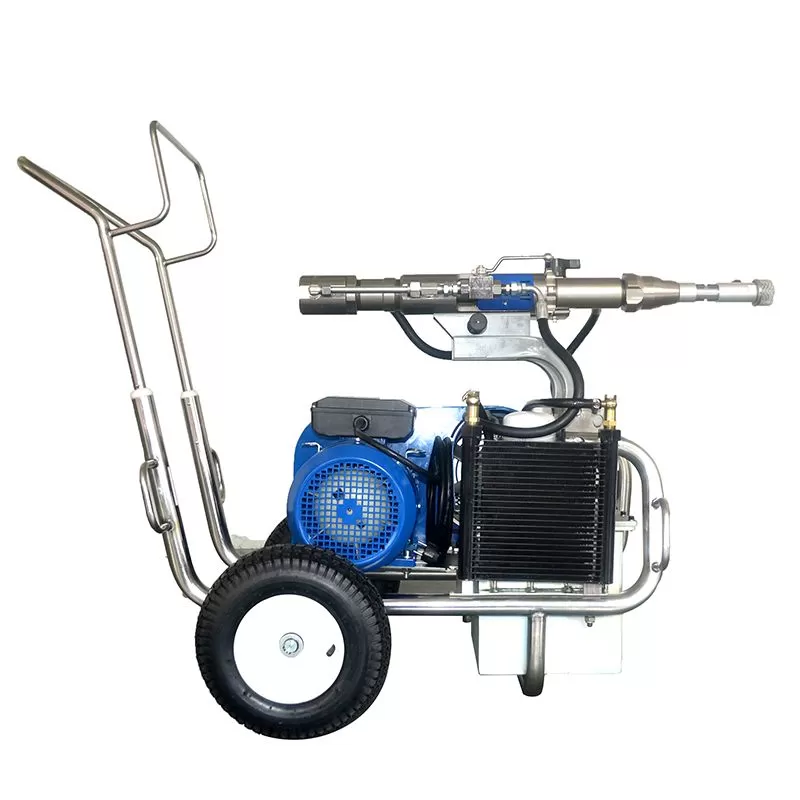
Why Equipment Quality and Manufacturing Expertise Go Hand-in-Hand
Many equipment brands operate strictly as trading companies or light assemblers. They purchase generic valves, standard electric motors, and off-the-shelf heaters, then bolt them onto painted frames. When a pump fails under 3,000 PSI on a commercial roof, these resellers rarely have the engineering data to fix the root problem.
True source manufacturers control every step of production. Their engineers design fluid blocks, oversee CNC machining tolerances, test metallurgy under heat stress, and calibrate digital temperature sensors inside their own facilities.
Integrating spray foam equipment and manufacturing under one roof delivers measurable benefits to contractors and distributors:
- Tighter machining tolerances: Precision-ground piston rods and cylinders hold exact 1:1 chemical ratios across long hose runs.
- Longer seal life: Superior surface finishes reduce friction against abrasive isocyanate materials.
- Faster product improvements: In-house R&D teams turn contractor feedback into durable hardware updates quickly.
- Direct factory value: Buying closer to the production line eliminates unnecessary middleman markups.
Core Spray Foam Equipment and Manufacturing Standards to Evaluate
Before signing any purchase agreement, audit the manufacturer's complete product lineup. A capable factory builds systems that work together seamlessly from the chemical drum to the spray tip.
Spray Foam Proportioners
The proportioner serves as the engine of your operation. Reputable manufacturers typically produce three distinct drive systems tailored to different job profiles:
- Pneumatic proportioners: These units run on compressed air and feature straightforward mechanical layouts. They suit small residential retrofits and intermittent spraying, though they require large air compressors and can experience minor pressure dips during stroke reversals.
- Hydraulic proportioners: Hydraulic drives deliver high flow rates and steady spraying pressure without pulsation. Commercial roofers and high-volume contractors rely on hydraulic spray foam proportioners for continuous closed-cell applications.
- Electric proportioners: Electric motors offer quiet operation, compact footprints, and sharp digital pressure control. They fit well inside tighter trailer configurations where generator capacity stays limited.
Beyond the drive system, inspect the primary heating blocks. Cold winter temperatures thicken polyol resins and slow reaction speeds, so look for independent dual-zone heaters with rapid thermal recovery.
Heated Hoses and Spray Guns
Even the strongest proportioner fails if your heated hoses and spray guns cannot hold target temperatures to the nozzle. Polyurethane formulations—such as the rigid cellular plastics detailed in technical references on spray foam insulation—require balanced heat along every foot of line.
Ask how the manufacturer constructs its heated hose bundles. Look for tough abrasion-resistant scuff jackets, reliable copper heating elements, and accurate fluid temperature sensors that prevent cold spots or scorched A-side material.
On spray guns, focus on anti-clogging geometry and easy maintenance. Your crew needs air-purge or mechanical-purge guns that strip down quickly for cleaning without specialized shop tools.
Turnkey Mobile Spray Foam Rigs
Many growing contractors prefer spray foam machinery turnkey solutions rather than piecing together loose components. Check whether your partner builds complete mobile spray foam rigs inside box trucks or enclosed cargo trailers.
An experienced rig builder calculates exact generator kilowatt loads, secures transfer pumps, integrates rotary screw compressors, and installs fresh-air supply systems. Smart axle weight distribution and insulated trailer walls protect your raw chemicals long before the crew pulls a trigger.
5 Key Criteria for Choosing an OEM Spray Foam Equipment Manufacturer
Selecting a factory partner shapes your operating costs for the next five to ten years. Apply these five criteria to separate proven engineering houses from short-term vendors.
1. Engineering, R&D, and ISO Certified Equipment Manufacturing
Ask to inspect current factory quality credentials before placing an order. ISO certified equipment manufacturing—specifically adherence to ISO 9001 quality management standards—proves that a plant documents machining tolerances, calibrates gauges, and tracks component defects systematically.
Verify what happens on the test floor before shipping. Every proportioner should complete a full-load pressure run and multi-hour thermal cycle test prior to crating. Accurate metering matters because cured foam must meet strict construction benchmarks, including rigid polyurethane specifications published by ASTM International.
2. Customization and OEM Capabilities
Distributors and regional equipment brands often need more than off-the-shelf models. Look for an adaptable OEM spray foam equipment manufacturer that customizes machines for local field conditions.
For example, HVBAN collaborates with global partners to configure region-specific voltages (such as 220V single-phase or 380V three-phase power), tailor pump ratios for specialty polyurea coatings, adjust hose lengths, and apply private-label branding. Strong OEM engineering ensures every unit matches local safety codes and regional chemical viscosities.
3. Spare Parts Availability and Supply Chain Stability
Every high-pressure seal, O-ring, mix chamber, and check valve wears down over time. Ask the manufacturer how much ready-to-ship spare inventory sits in their warehouse today.
Confirm standard dispatch times for both routine gun rebuild kits and major assemblies like heater cartridges or circuit boards. Reliable factories keep high-wear parts stocked year-round and ship emergency orders within 24 to 48 hours.
4. Technical Training and After-Sales Support
Even veteran sprayers run into unfamiliar pressure alarms on complex commercial sites. Your manufacturing partner should back every machine with clear wiring schematics, video maintenance guides, and direct engineering support.
Test their communication speed before you buy. When a thermocouple fails mid-afternoon, you want troubleshooting help from technicians who actually built the unit—not an automated ticket queue.
5. Industry Reputation and Field Case Studies
Look past studio product photos and ask for long-term field data. Speak with contractors running the equipment across harsh climates, from sub-zero northern winters to humid coastal summers.
Pay close attention to multi-year durability feedback. Machinery that holds steady 2,500 PSI output after spraying hundreds of chemical drums proves the quality of the factory's metallurgy and seal design.
Calculating Total Cost of Ownership (TCO) vs. Upfront Price
Experienced B2B buyers never select industrial machinery based solely on the lowest purchase price. A cheap proportioner frequently becomes the costliest liability in your fleet within its first six months.
Look closely at the hidden operational costs created by low-grade manufacturing:
- Off-ratio chemical waste: Even a 5% metering imbalance ruins expensive sets of A and B drums. Worse, uncured or shrinking foam forces your crew to scrape substrates and respray the job for free.
- Crew downtime expenses: Paying three technicians to sit in a truck while troubleshooting a blown seal quickly wipes out any initial machine discount.
- Frequent component replacements: Poorly machined shafts chew through packing seals rapidly, multiplying your annual repair bills.
- Contractual delay penalties: Missing commercial construction schedules damages your standing with general contractors and triggers costly late fees.
Calculate Total Cost of Ownership over a five-year span. Spending slightly more upfront for precision-built equipment pays you back through higher daily board-foot yields and predictable maintenance budgets.
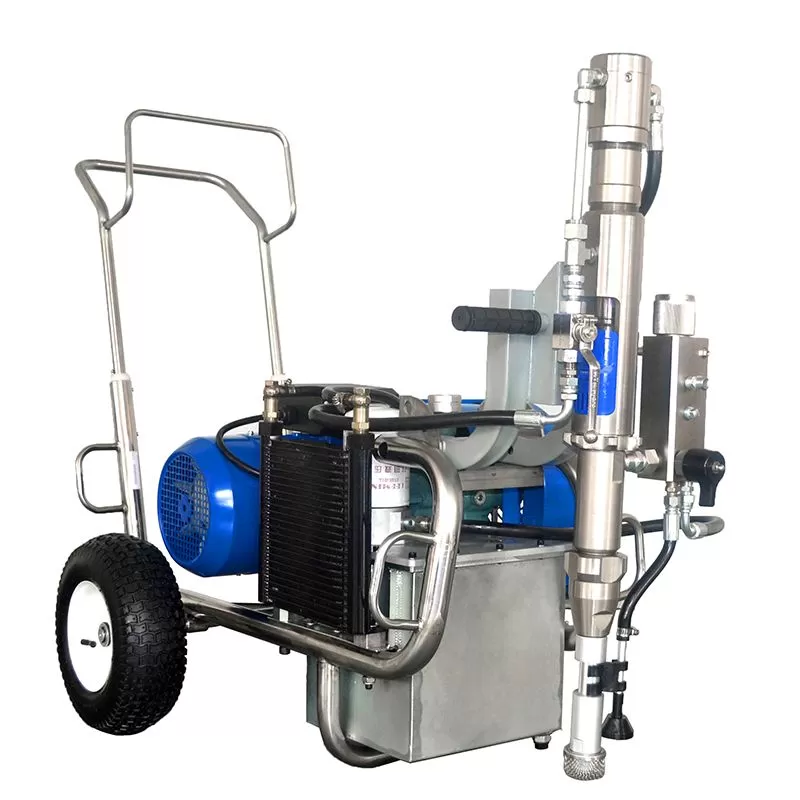
Actionable Checklist: 6 Questions to Ask Before Signing a Contract
Before wiring a deposit to any machinery supplier, put these six practical questions in writing:
- What does your factory warranty cover? Confirm exact duration terms for hydraulic pumps, heating blocks, control boards, and consumables.
- Do you test every machine with live fluid before shipping? Request serial-numbered pressure logs and quality inspection sheets for your specific units.
- What is your guaranteed lead time for custom builds? Lock down realistic production schedules for turnkey mobile rigs or OEM container orders.
- Do your machines use standard industry thread fittings? Proprietary odd-sized hose fittings can strand your crew when an emergency repair happens far from home.
- How fast can you ship critical spare parts? Verify air-freight courier options and ask whether regional warehouses stock common rebuild kits.
- What technical onboarding comes with the order? Ensure your team receives startup checklists, winterization instructions, and troubleshooting training.
Frequently Asked Questions (FAQs)
Q1: What manufacturing certifications should commercial spray foam equipment have?
A1: Look for ISO 9001 certification on the manufacturing facility to verify consistent quality control. Depending on your target market, the machinery itself should also carry recognized electrical and safety compliance marks such as CE, UL, or ETL to pass job site inspections and insurance audits.
Q2: Is it better to buy directly from an OEM spray foam equipment manufacturer or a local dealer?
A2: Buying direct from a manufacturer makes strong financial sense for multi-rig contractors, distributors, and private-label brands seeking factory pricing and engineering customization. Single-rig startups often value local dealers for walk-in parts access, though working with a responsive factory that maintains rapid express parts shipping gives you direct pricing without sacrificing uptime.
Q3: How long does it take to build turnkey spray foam machinery solutions?
A3: Standard proportioners, spray guns, and heated hoses held in stock typically ship within one to two weeks. Custom mobile spray foam rigs or private-label OEM batches generally take four to eight weeks, depending on trailer availability, generator sourcing, and voltage modifications.
Q4: Which proportioner drive system offers the best ROI for high-volume contractors?
A4: Hydraulic proportioners usually deliver the strongest long-term ROI for commercial roofing and heavy daily spraying. They handle continuous high-pressure output with minimal mechanical stress, support longer heated hose runs, and pump more pounds per minute than comparable pneumatic units.
Q5: How do I prevent downtime when ordering spare parts from an overseas manufacturer?
A5: Always order a first-year critical spares kit—including gun mix chambers, O-rings, fluid seals, check valves, and temperature sensors—alongside your primary equipment purchase. Confirm ahead of time that your supplier stocks spare kits year-round and dispatches emergency orders via 48-hour air express.
Partner With a Trusted Leader in Spray Foam Equipment and Manufacturing
Your spray machinery drives every dollar of revenue your crew or distribution business earns. Evaluating factory tolerances, pre-shipment testing, TCO, and spare parts logistics protects your projects from unexpected stoppages.
Choosing proven engineering over short-term discounts delivers smoother spray patterns, higher chemical yields, and healthier profit margins across every job site.
For contractors and distributors seeking dependable spray foam equipment and manufacturing, HVBAN pairs precision production with responsive technical support. Reach out to our team today to request a detailed equipment catalog, schedule a factory consultation, or discuss custom OEM and turnkey rig solutions tailored to your market.