
Buying a budget paint sprayer often leads to unexpected losses. A machine purchased for $500 that fails mid-shift can trigger thousands of dollars in delays, crew downtime, and dry-fall rework. In commercial painting, calculating the best value airless paint sprayer requires looking past the purchase tag.
For rental yards, facility directors, and painting contractors, value comes down to a mechanical equation: flow rate multiplied by pump durability, divided by maintenance downtime. Investing in equipment that lasts reduces long-term operational costs.
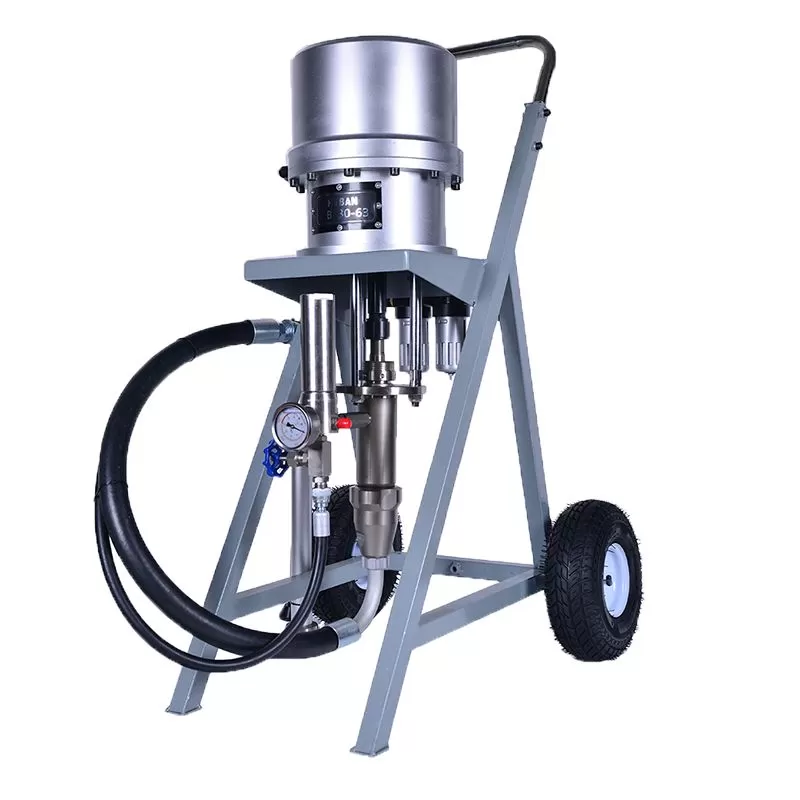
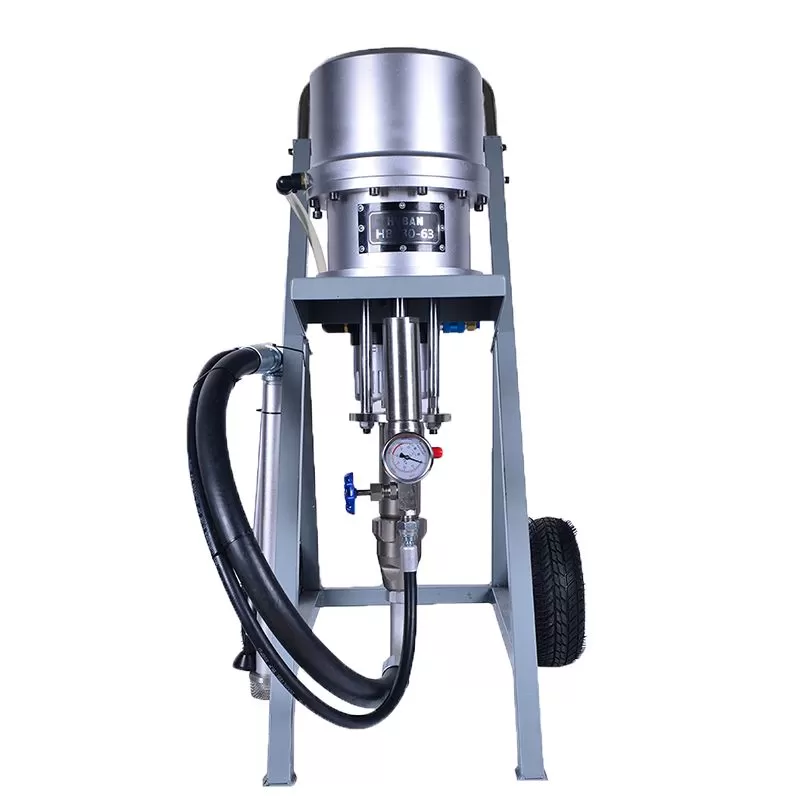
Manufacturers like HVBAN focus on this equation by building high-output, durable piston fluid sections that withstand abrasive coatings. If you need to upgrade your fleet or restock industrial equipment, submit an inquiry to our technical team today for full specifications and commercial wholesale pricing.
The B2B Value Equation: Redefining Sprayer ROI
Commercial equipment purchases differ significantly from consumer buying decisions. Retail buyers evaluate sticker prices. Commercial buyers measure the total cost of ownership (TCO) across hundreds of operating hours and thousands of gallons applied.
Consider this standard fluid-handling valuation formula:
Commercial Value = (Sustained Flow Rate × Pump Duty Cycle Hours) / (Initial Capital Cost + Field Maintenance Expense)
A sprayer that costs $1,800 and sprays 15,000 gallons before repacking offers far better value than an $800 unit requiring new packings every 2,500 gallons. Uptime directly drives crew profitability.
Part 1: Flow Rate and Pressure Dynamics
Gallons per minute (GPM) ratings are often misunderstood. GPM does not simply measure how fast an operator sweeps a spray gun. It dictates the fluid pressure reserve available when pushing dense coatings through long hose runs.
GPM Versus Orifice Size Selection
Every spray tip orifice requires a specific fluid volume to maintain its fan pattern. A .017 tip spraying standard architectural latex demands roughly 0.31 GPM at 2,000 fluid PSI. If your sprayer maxes out at 0.40 GPM, the pump runs at 80% capacity continuously.
This rapid cycling overheats fluid sections and accelerates seal degradation. A true commercial unit rated at 0.80 to 1.25 GPM supports larger tips—such as .023 to .027—without straining the motor. It also enables dual-gun operation on large commercial jobs, cutting job hours in half.
Pressure Drop Over 100+ Foot Hose Runs
Frictional pressure drop poses a consistent problem across commercial job sites. Pumping heavy coatings through a 150-foot, 1/4-inch fluid line can result in an 800 PSI drop between the fluid manifold and the gun head.
Maintaining an effective atomization pressure of 2,200 PSI at the tip requires the pump to cycle consistently at 3,000 PSI. Budget universal motors struggle under this backpressure, generating excess heat that melts winding insulation.
Industrial-grade brushless DC motors eliminate this problem. Brushless motors deliver immediate torque across all pressure bands, automatically adjusting stroke frequency without thermal shutdown. This ensures a consistent atomization pattern across multi-story hose runs.
High-Viscosity Fluid Atomization
Standard architectural paints atomize easily, but industrial paints like elastomeric coatings, 100% solids epoxies, and intumescents present a different challenge. These high-solids materials demand sustained high fluid pressure combined with low shear.
Pumps with inadequate displacement struggle to draw thick fluids through the intake foot valve, causing cavitation. Proper stroke length and high-torque direct-drive systems ensure smooth flow and prevent tip clogs, even when running heavy coatings.
Part 2: Durability Deep-Dive – Internal Engineering Analysis
The pump fluid section determines the practical lifespan of the best value airless paint sprayer. When running abrasive materials like zinc-rich primers or aggregate-heavy block fillers, fluid sections face extreme internal wear.
Piston Pumps Versus Diaphragm Pumps
Diaphragm sprayers work well for light stains, lacquers, and architectural paints. However, commercial work demands a mechanical piston pump.
Piston pumps use long, linear displacement strokes to generate steady fluid movement at high pressures. They handle heavy coatings far more effectively, making them the standard choice for industrial contractors.
Wear Component Metallurgy: Plungers and Piston Rods
Piston rods face constant abrasion from pigment particles suspended in the fluid stream. The rod's surface finish and base metallurgy dictate how long your packings will last:
Flash Chrome Plating: Common in entry-level sprayers. The thin chrome layer wears away quickly under abrasive loads, exposing soft carbon steel that scores and damages seals.
Hard Chrome Plated Stainless: Standard commercial grade. Provides good resistance against waterborne corrosion and moderate mineral pigment wear.
Tungsten Carbide / Ceramic Sleeves: The premium industrial benchmark. HVBAN and leading industrial machinery lines use hardened micro-grain carbide coatings. These surfaces resist deep scratching even when spraying abrasive coatings like dry-fall primers and fire-retardant paints.
Fluid Packings and Seal Geometry
Packing seals serve as the primary wear boundary. As fluid cycles under 3,300 PSI, packing sets stop paint from blowing past the upper piston housing into the drive gear cavity.
Advanced commercial pumps use stacked V-packings that alternate UHMWPE (ultra-high-molecular-weight polyethylene) with heavy-duty leather. UHMWPE delivers low-friction abrasion resistance, while leather absorbs trace lubricants to reduce friction-induced heat. Dual-lip spring seals also adjust wear tension automatically, reducing the need for manual packing nut adjustments.
Intake and Discharge Valve Engineering
Check valves take continuous abuse, cycling up to 60 times a minute. Every stroke slams a carbide ball against a precision-machined valve seat.
Sprayers designed for long service life feature solid tungsten carbide balls and reversible carbide seats. Reversible seats double component lifespan: when one face wears out, technicians can simply flip the seat over, halving wear-part replacement costs.
Tool-Free Fluid Section Replacement
Routine maintenance should not require an off-site trip to the repair shop. Advanced modular pump assemblies allow operators to remove and replace an entire fluid section in under five minutes with a simple hammer or pin wrench.
Keeping a spare fluid section on-site eliminates job downtime. A contractor can swap pumps right on the job, finish spraying the current section, and rebuild the worn assembly later in the shop.
Part 3: 2026 Commercial Best Value Sprayer Matrix
Selecting the best value airless paint sprayer depends on matching machine output to your crew's daily production demands. The matrix below categorizes commercial sprayers by performance tier:
| Sprayer Category | Rated GPM Output | Max Operating PSI | Max Tip Size (1 Gun / 2 Guns) | Core Application Scope | Target Service Life (Gallons) |
|---|---|---|---|---|---|
| Light Commercial | 0.50 – 0.70 GPM | 3,000 PSI | .021 / N/A | Residential repaints, tenant turns, property management | 10,000 – 15,000 gal |
| Production Workhorse | 0.80 – 1.25 GPM | 3,300 PSI | .029 / .019 | New construction, commercial interiors, drywall, block fill | 35,000 – 60,000 gal |
| Heavy Industrial | 1.50 – 2.50+ GPM | 3,300 – 4,000 PSI | .039 / .027 | Intumescent fireproofing, roof coatings, protective bridge steel | 100,000+ gal |
Light Commercial Tier (0.50 – 0.70 GPM)
Units in this bracket serve as reliable support equipment for small painting teams, residential general contractors, and facility maintenance crews. They balance mobility with dependable service life. While limited to single-gun setups, quality units feature brushless motors and modular fluid pumps that easily outlast retail-grade sprayers.
Production Workhorse Tier (0.80 – 1.25 GPM)
This category represents the peak of commercial ROI. These machines provide enough flow to run two spray guns on large drywall jobs or push thick coatings through 200 feet of hose. For mid-sized commercial paint companies, this category delivers the lowest cost per gallon over its operating life.
Heavy Industrial Tier (1.50+ GPM Hydraulic / Gas)
Industrial jobs that demand elastomeric waterproofing or structural steel protection require heavy-duty hydraulic drive pumps. By replacing mechanical gears with hydraulic fluid drive systems, these machines run cooler under continuous, all-day loads. They represent an essential long-term investment for infrastructure and protective coating contractors.
Part 4: B2B Buyer's Calculator – Cost Per Gallon Metric
Savvy procurement managers track machinery costs per gallon sprayed. Calculating this rate gives you an accurate picture of equipment ROI:
Cost Per Gallon = (Initial Cost + (Packing Rebuild Cost × Rebuild Cycles) + Downtime Costs) / Total Gallons Applied
The Real Cost: A Practical Example
Consider an entry-level consumer sprayer priced at $650 spraying 4,000 gallons of acrylic latex over two years:
Initial Purchase: $650
Rebuild kits & replacements (failed pump rod, two packing failures): $450
Crew downtime (two job-site failures at $120/hr, 8 total hours lost): $960
Total Cost: $2,060 = $0.515 per gallon sprayed
Now, compare that to a commercial-grade durable piston pump paint sprayer priced at $1,800 spraying 25,000 gallons over four years:
Initial Purchase: $1,800
Routine maintenance (three drop-in packing sets): $360
Crew downtime: 0 hours (fast 5-minute modular swaps): $0
Total Cost: $2,160 = $0.086 per gallon sprayed
The higher-grade industrial unit saves more than 40 cents per gallon. On large multi-family or commercial projects, that difference adds up to real savings.
Commercial Procurement Checklist
Before purchasing sprayers for your commercial crew or fleet, confirm the following technical specifications:
Drive Motor: Brushless DC motor with enclosed fan-cooled housing.
Fluid Section Metallurgy: Chromed stainless steel or tungsten carbide piston rod.
Intake Valve Access: Low-mounted submerged foot valve for efficient high-viscosity intake.
Power Management: Solid-state pressure transducer to prevent motor hunting and pulse surges.
Safety Certifications: Full CE, UL, or explosion-proof certifications for hazardous spray environments.
Frequently Asked Questions (FAQ)
Q1: What is the optimal GPM for dual-gun commercial painting?
A1: To run two spray guns simultaneously with architectural latex paints, you need a sprayer with a minimum output of 0.85 GPM. This provides enough volume to supply two .019 spray tips at 2,000 sustained PSI without pressure drops at either gun head.
Q2: How often should we repack a commercial piston pump fluid section?
A2: High-grade commercial piston pumps running UHMWPE and leather V-packings generally operate between 3,000 and 7,500 gallons before needing service. The exact timeline depends on fluid abrasiveness. Regular cleaning, using throat seal lubricant (TSL), and avoiding running the pump dry will significantly extend seal life.
Q3: Why do brushless DC motors outperform universal brush motors on commercial job sites?
A3: Brushless DC motors do not rely on mechanical carbon brushes to transfer electrical current. This eliminates internal friction, reduces internal heat, and removes sparking hazards. Brushless designs deliver significantly higher torque at low RPMs, enabling steady fluid pressure without overheating.
Q4: Can a mid-range commercial airless sprayer run 100% solids epoxy?
A4: Spraying 100% solids epoxy requires an output of at least 1.0 GPM, a pressure rating of 3,300 PSI or higher, and a short 3/8-inch fluid hose to minimize line resistance. Running high-solids epoxies on lower-displacement machines can cause fluid stalling, cavitation, and sudden tip plugging.
Q5: What are the main signs that a piston rod needs replacement rather than just new seals?
A5: If you run a fingernail down the piston rod and feel vertical grooves, scoring, or uneven wear on the plating, the rod must be replaced. Installing fresh packing sets over a scored piston rod will tear the new seals, causing fluid to leak past the upper packings within just a few hours of use.
Conclusion: Choose Field Reliability Over Low Purchase Cost
Real machine value comes down to job-site performance and mechanical uptime. When painting crews spend their days working instead of troubleshooting equipment issues, profits rise. Choosing the best value airless paint sprayer means prioritizing durable piston assemblies, high sustained flow rates, and fast on-site repairability over low upfront prices.
HVBAN manufactures precision-engineered fluid handling equipment built to handle continuous, demanding use. Our machines deliver high volume-per-stroke rates and use premium hardened alloys to keep commercial projects running smoothly.
Ready to upgrade your commercial fleet or source proven industrial machinery? Contact our sales engineering team today to review detailed equipment specs, request customized quotes, or discuss distributor partnerships.