
Latex paint is everywhere. You see it on interior walls, exterior siding, commercial ceilings, and even on furniture. Contractors and DIYers alike choose latex for its durability, low odor, and easy cleanup. But applying it well is another matter. Rollers leave stippled textures. Brushes take forever. And conventional compressed-air sprayers waste tons of material through overspray.
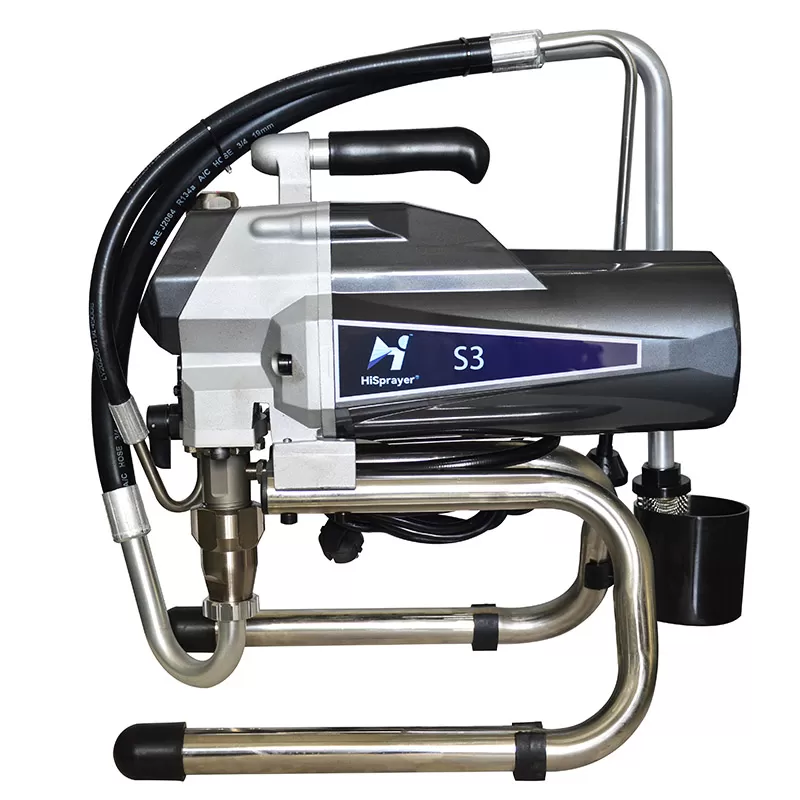
That is exactly why the airless paint sprayer for latex paint has become the go-to tool for professionals worldwide. These machines push paint through a tiny tip at extreme pressures—up to 3,000 PSI—and turn thick latex into a fine, even mist. No air compressor required. No thinning down to watery consistency. Just smooth, fast, and efficient coverage.
But not every airless sprayer handles latex the same way. Some clog. Some pulse. Some leave tiger stripes on your beautiful wall. So how do you pick the right one? This guide breaks down the essential specs, highlights real-world performance factors, and shows you why HVBAN—a global fluid equipment manufacturer with over 20 years of experience—consistently ranks as a top choice for latex paint applications.
Why Latex Paint Demands an Airless Sprayer
Let's start with the basics. Traditional spray guns use compressed air to atomize paint. That works fine for thin lacquers or stains. But latex is thicker. Much thicker. When you push latex through an air-assisted gun, you get excessive fog, uneven patterns, and a lot of wasted material bouncing back into your face.
An airless paint sprayer for latex paint solves this problem at the source. It uses a high-pressure pump—typically a piston or diaphragm type—to force liquid through a hardened steel tip. The sudden pressure drop from 2,000 to 3,000 PSI down to atmospheric pressure shatters the fluid into microscopic droplets. The result? A dense, fan-shaped pattern that lays down perfectly level films.
Here are the concrete advantages you will notice on your next job:
Zero brush marks or roller stipple. The atomized latex flows out and levels itself, leaving a glass-smooth finish that looks factory-sprayed.
Speed that shaves hours off your schedule. A decent airless unit covers 10 to 15 square metres per minute. That is 5 to 10 times faster than rolling, especially on large ceilings or open floor plans.
Material savings that add up fast. Transfer efficiency ranges from 65 % to 75 % with proper technique. Compare that to 30 % to 40 % for conventional air spray. Less paint in the air means more paint on the wall.
Direct application of factory-mixed latex. Most airless pumps can handle unthinned latex right out of the pail. No need to add water unless the manufacturer specifically recommends it.
HVAC contractors, painting crews, and property maintenance teams all rely on this technology. And for good reason—once you spray latex with a quality machine, you will never go back to rollers for large surfaces.
5 Critical Factors When Choosing an Airless Sprayer for Latex
Not every sprayer is built for the unique demands of latex. The pigment load, resin chemistry, and viscosity vary widely between brands—from lightweight ceiling paint to heavy-duty exterior elastomerics. Before you buy, evaluate these five core parameters.
1. Maximum Working Pressure (PSI / Bar)
Latex requires serious hydraulic force to atomise properly. Look for a unit that delivers at least 2,000 PSI at the tip. But we recommend aiming higher. Sprayers rated to 3,000 PSI or more give you a safety margin. You can dial back the pressure for thin paints or crank it up for thick, high-build formulations without losing pattern quality.
Many entry-level machines top out at 1,500 PSI. Those are fine for stains or enamels, but they struggle with latex. The result is spitting, splattering, and an uneven fan. Save yourself the frustration—choose a pump with genuine high-pressure capability.
2. Flow Rate (Litres per Minute)
Flow rate determines how fast paint moves from the pail to the tip. It also dictates how long a hose you can run and how large a tip you can use. For small renovation jobs or weekend projects, 1.5 to 2.0 L/min works just fine. That supports a 15-metre hose and a 0.017-inch tip—plenty for a standard room.
For production crews or multi-storey commercial work, step up to 2.5 L/min or higher. These pumps feed longer hoses (up to 30 metres) and larger tips (0.021 to 0.023 inches). You can spray continuously without waiting for the pump to catch up. And if you ever switch to heavier coatings like block filler or elastomeric, the extra flow keeps you productive.
3. Motor Type and Power Source
Electric motors dominate the latex spraying scene. They are quiet, clean, and require minimal maintenance. Most run on standard 110V or 220V outlets, making them ideal for indoor renovations and residential sites. Look for models with thermal overload protection—that prevents the motor from burning out during extended runtime.
Gasoline-powered units shine on remote job sites where power is unavailable. They deliver high flow and pressure but demand more upkeep. Hydraulic and pneumatic versions exist for industrial settings, but they are overkill for typical latex work. For 90 % of users, an electric airless sprayer is the right call.
4. Tip Size and Reverse-A-Clean Function
The spray tip is where the magic happens. For latex paint, the sweet spot lies between 0.017 and 0.023 inches. A 0.017 tip works well for smooth interior finishes, while a 0.021 or 0.023 handles thicker exterior paints and primers. The fan width also matters—a 412 tip gives a 12-inch fan, while a 515 gives a 15-inch fan for faster coverage.
Do yourself a favour and choose a reverse-a-clean tip. When debris blocks the orifice, you simply rotate the tip 180 degrees, pull the trigger, and the reverse flow flushes out the clog. This feature alone saves you from disassembling the gun mid-job. Every professional painter we know insists on it.
5. Portability and Wheel Design
Latex jobs require movement—from room to room, floor to floor, or around the exterior of a house. A heavy, awkward sprayer slows you down. Look for a compact design with swivel casters and a sturdy handle. Pneumatic tyres roll smoothly over thresholds and extension cords, while fixed wheels can be a nuisance.
Cart-style sprayers offer stability too. You can set the unit down without it tipping over, and the large wheels handle rough terrain. For ladder work, consider a lightweight pole-gun setup that reduces arm fatigue. Mobility directly impacts your daily production, so do not overlook this factor.
Why HVBAN Stands Out for Latex Paint Spraying
You have probably seen HVBAN equipment on job sites or in distributor catalogues. Based in Fuzhou, China, this manufacturer has spent over two decades refining fluid handling technology. They do not just assemble parts—they engineer pumps, design control systems, and test every unit under real-world conditions. Their focus on latex applications shows in the details.
Let's look at what makes HVBAN a preferred partner for professional painters and contractors.
Proven Technology Backed by Patents
HVBAN holds more than 40 active patents, including inventions and utility models. These cover pump transmission designs, pressure regulation algorithms, and seal materials that resist abrasion from titanium dioxide (the main pigment in white latex). They continuously refine their products based on field feedback, not just lab data.
Certification matters too. Every HVBAN sprayer carries ISO 9001 for quality management and CE marking for European safety standards. That means you get consistent manufacturing quality and compliant electrical components—no surprises when the inspector shows up.
Product Lines That Match Every Job Scale
One size does not fit all. HVBAN organises its portfolio to match specific workflows:
Electric high-pressure units – The most popular category for latex. These feature variable-frequency drives that let you adjust pressure on the fly, matching the exact viscosity of your paint. You get fine control without pulsing or pressure spikes.
Gasoline-driven sprayers – Perfect for new construction or outdoor sites without grid power. They deliver consistent flow even at high elevations.
Hydraulic and pneumatic models – Designed for continuous industrial operation, these units run multiple guns simultaneously and handle the heaviest coatings.
Road marking machines and specialty equipment – While not for walls, these demonstrate HVBAN's deep understanding of high-viscosity fluid applications.
For latex-focused contractors, the electric variable-speed series deserves special attention. You can spray thin interior flats at low pressure to minimise overspray, then crank it up for thick elastomeric without changing pumps. That versatility reduces equipment inventory and simplifies training for new crew members.
Global Presence with Real-World Validation
HVBAN ships to more than 140 countries. Their equipment works in the humid heat of Malaysia, the dry altitude of Peru, the freezing conditions of Russia, and the busy job sites of Italy and Spain. Each market has unique coating preferences and application methods, yet HVBAN sprayers consistently earn repeat orders.
Why? Contractors report fewer breakdowns, easier troubleshooting, and longer pump life—even when spraying abrasive latex primers daily. The brand has built a reputation for durability and pressure stability that competing products often lack. When a machine survives 500 hours of commercial use without major service, word spreads quickly.
After-Sales Support That Keeps You Spraying
Let's be honest—even the best equipment needs maintenance. Seals wear, filters clog, and tips eventually erode. HVBAN addresses this with a proactive service approach. After you purchase, their team contacts you directly to understand your setup, hose length, typical paint types, and daily runtime. They use that information to recommend spare parts and preventive maintenance intervals.
Video tutorials, quick-reference guides, and a responsive spare-parts network minimise downtime. Many competitors leave you to figure things out alone, but HVBAN treats every sale as the start of a long-term partnership. For a business owner, that reliability translates directly to profit.
Practical Spraying Techniques for Latex with HVBAN
Buying a great sprayer is only half the battle. Technique determines whether you get a showroom finish or a mess that requires extra sanding. Follow these field-tested steps to get the most out of your airless paint sprayer for latex paint.
Thinning – Less Is More
Read the paint label. Most premium latex brands recommend 0 % to 5 % water addition at most. Resist the urge to thin beyond that. Over-thinning reduces viscosity, which leads to runs, sags, and poor hiding power. If you absolutely must thin, add water slowly—a little at a time—and stir thoroughly before testing.
Strain Every Batch
Latex paints often contain dried skin particles or pigment agglomerates. These cause tip clogs and ruin your fan pattern. Always pour your paint through a 60–100 mesh strainer before loading the pump. HVBAN includes compatible strainers with their units, and we recommend using them without exception.
Pressure Adjustment – Start Low, Go High
Begin with the pressure dial set to about 50 % of maximum. Trigger the gun onto a piece of cardboard and observe the pattern. Increase pressure gradually until you see a uniform, oval-shaped fan with no tails on the edges. If you see heavy centres and thin edges, you need more pressure. If the pattern is too wide and misty, back it off. The sweet spot gives you full coverage with minimal overspray.
Spraying Motion – Distance and Overlap
Hold the gun 30 to 40 cm from the surface. Keep it perpendicular to the wall—tilting the gun creates uneven thickness. Move your arm smoothly and steadily, overlapping each pass by about 50 %. This ensures wet-on-wet coverage and eliminates banding. For ceilings, start near the corner and work your way out, maintaining a consistent pace.
Clean-Up – Do Not Delay
Latex dries quickly. If you leave paint in the pump, hoses, and tip, you will face a painful cleaning session or worse—permanent blockages. As soon as you finish spraying, circulate clean water through the system using the prime valve. Remove and soak the tip in water. HVBAN's quick-release design makes this process fast and straightforward. A 10-minute cleanup now saves you an hour of repairs tomorrow.
Recommended HVBAN Models for Different Users
Choosing the right model ensures you neither overspend nor under-spec. Here are three common profiles and the corresponding HVBAN recommendations.
DIY Homeowner / Small Renovation
If you are painting a basement, a single room, or a small rental unit, consider the HVBAN portable electric mini. It generates 2,500 PSI and flows 1.5 L/min, which is plenty for ceilings and walls. The lightweight design allows one-person transport, and the compact size fits in a car trunk. Many DIYers buy this unit for one project and keep it for years of touch-ups.
Professional Crew / Mid-Size Projects
For regular commercial work—apartment complexes, office fit-outs, or retail spaces—the HVBAN standard electric sprayer hits the sweet spot. At 3,000 PSI and 2.5 L/min, it pairs with a 15-metre hose and a 0.019 tip. You can spray two coats on a 100-square-metre apartment in under two hours. The durable pump handles daily use without faltering.
Large Commercial / Industrial Contracts
When you are spraying warehouses, factories, or multi-storey buildings, production speed matters most. HVBAN's high-flow electric or hydraulic series delivers continuous 8‑hour operation. Dual pump pistons extend service intervals, and the large-capacity filtration system keeps paint flowing cleanly. These machines cost more upfront, but they pay for themselves within months on large-scale contracts.
No matter which tier you choose, HVBAN offers compatible accessories—hoses, filters, tips, and seal kits—to keep your setup complete and ready for action.
Frequently Asked Questions (FAQ)
We have gathered the most common queries from contractors and site supervisors about using an airless paint sprayer for latex paint. These answers reflect both manufacturer specifications and field experience.
Q1: Can I spray unthinned latex paint through an airless sprayer?
A1: Yes, most professional-grade airless sprayers handle unthinned latex without issues. HVBAN units, in particular, are engineered with high-pressure pumps that generate sufficient force to atomise thick latex directly from the pail. However, always check the paint manufacturer's label. Some premium "heavy-body" paints may benefit from a slight reduction (5 % water max) to improve flow through long hoses. Test on cardboard first to confirm pattern quality.
Q2: What tip size is ideal for smooth ceiling latex?
A2: For standard interior flat or eggshell latex, a 0.015 to 0.017 inch tip works beautifully. It produces a fine fan that minimises overspray on overhead surfaces. For textured or exterior latex, move up to 0.019 to 0.021 inch to accommodate the heavier solids. Always choose a reverse-a-clean tip—clogs happen more often with ceiling work due to settling paint in the hose, and the reversing feature keeps you productive.
Q3: How do I prevent pressure fluctuations while spraying?
A3: Pressure fluctuation, or "pulsing," usually stems from air in the system or a worn piston seal. First, bleed the prime valve until a steady stream of paint flows without sputtering. Next, inspect the inlet strainer—a clogged strainer starves the pump and causes erratic pressure. Finally, check the pressure control knob. HVBAN's variable-frequency drive models maintain constant pressure regardless of hose length, reducing this issue significantly. If pulsing persists, service the piston packing per the manual.
Q4: How often should I replace the spray tip?
A4: Tip wear depends on the volume of paint sprayed and the abrasiveness of the pigments. Titanium dioxide, common in white latex, wears tips faster than clear coatings. As a rule of thumb, inspect your tip after every 100 gallons (about 380 litres) of latex. You will notice the fan pattern widening or becoming uneven. A worn tip reduces transfer efficiency and forces you to increase pressure, which worsens overspray. Replace tips as soon as you see pattern degradation—it is a low-cost fix that protects your finish quality.
Q5: Is HVBAN equipment compatible with third-party accessories?
A5: Yes, HVBAN sprayers use industry-standard connections for hoses, guns, and tips. You can readily use components from other reputable brands. That said, HVBAN recommends using their original spare parts for the pump and pressure control system. Their seals, filters, and pistons are precisely matched to the unit's hydraulic design, ensuring optimal performance and longevity. Mixing parts from unknown suppliers may void your warranty and compromise reliability.
Final Thoughts – Your Next Sprayer Matters
Selecting the best airless paint sprayer for latex paint is not about buying the most expensive machine. It is about matching specifications to your daily work environment, paint types, and crew skill level. Pressure, flow, tip size, and portability all play critical roles. So does the manufacturer's commitment to quality and support.
HVBAN delivers on all fronts. With 20+ years of focused engineering, 40+ patents, and a global footprint spanning 140 countries, they have earned the trust of professional painters and facility managers alike. Their electric sprayers bring variable-speed precision to latex applications, while their gas and hydraulic models cover heavy-duty needs. And their proactive after-sales service means you are never left stranded with a broken pump.
Whether you manage a small renovation crew or oversee large commercial developments, take the time to evaluate your requirements against the parameters in this guide. Reach out to HVBAN's technical sales team—they will ask about your typical paint viscosity, hose length, daily throughput, and power availability. Based on that, they will recommend a configuration that optimises your productivity and minimises your total cost of ownership.
Ready to upgrade your painting workflow? Contact HVBAN today for personalised selection advice, pricing, and availability. Request a demo unit to test on your own latex paints. See the difference that professional engineering makes—smoother finishes, faster cycles, and happier clients. Your next project deserves equipment that performs as hard as you do.
Inquiry lines are open for distributors, contractors, and facility owners. HVBAN welcomes bulk orders, custom configurations, and long-term partnership discussions. Let us help you choose the airless sprayer that fits your business perfectly.